Can Bentonite Cat Litter Be Reused? Our Explanation at LINGSHUAI
We distinguish continued use of suitable remaining litter from washing or regenerating soiled bentonite, and explain our approach to clumping and production drying.
By LINGSHUAI
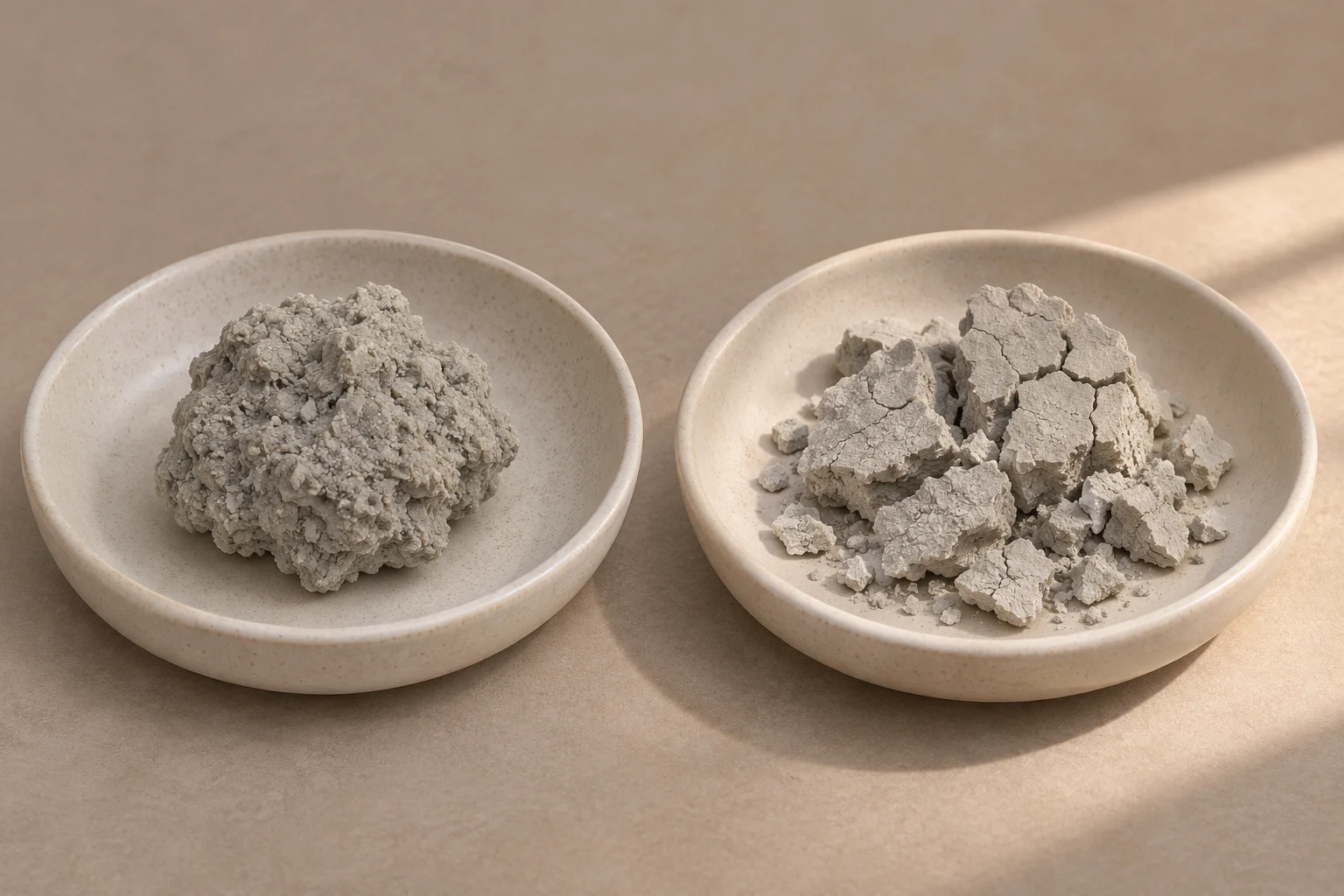
Bentonite cat litter can remain in use after soiled clumps and solid waste are removed, provided the remaining litter is still suitable for use. That is different from washing, drying or heating urine-soaked litter and putting it back into the tray. We do not present our bentonite products as washable or regenerable cat litter.
At LINGSHUAI, we develop clumping litter so the wetted portion can be separated from surrounding loose granules. The practical aim is selective removal—not repeated recovery of the same contaminated material. Understanding that difference makes the question of “reuse” much clearer.
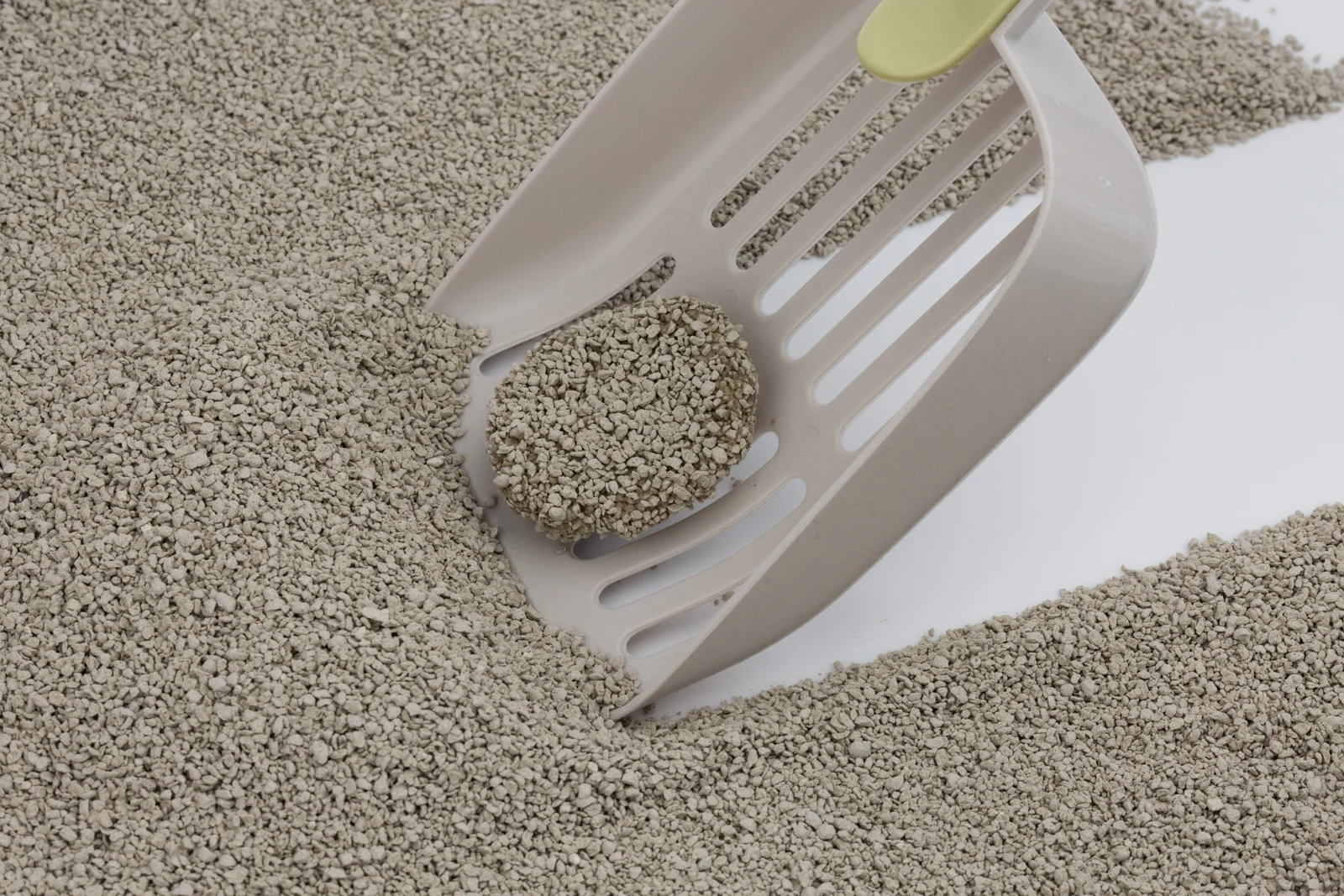
A LINGSHUAI-supplied photograph showing a formed clump on a slotted scoop beside loose granules. The image illustrates separation; it does not demonstrate a washing or regeneration cycle.
1. Continuing to Use Remaining Litter Is Different from Reusing Soiled Clumps
What Remains After We Separate the Wetted Portion
In our clumping bentonite formulas, liquid wets a local area and the clay particles bind into a mass. Removing that mass leaves surrounding loose litter in the tray. This separation is what allows a clumping product to be used progressively, rather than discarding the entire bed after each wetting event.
The distinction is between material left after removal and material recovered from the removed clump. They are not interchangeable. We also avoid calling every loose granule “unused”: a tray in service can contain small fragments and residues that are not obvious from its surface.
Our explanation of why bentonite absorbs water and clumps describes the material mechanism. Here, the important point is what the finished product allows us to separate.
Why Topping Up Does Not Reset the Entire Litter Bed
Fresh litter replaces some of the quantity removed during cleaning. It does not remove existing fragments or turn the remaining bed into a new, unopened product.
Questions about retaining loose litter also appear in Reddit discussions about saving or discarding litter during cleaning. These questions highlight an ambiguity in the word “reuse”; they do not establish that any retained litter is suitable indefinitely.
| Situation | How we describe it |
|---|---|
| Removing soiled clumps and retaining suitable loose litter | Continued use of the remaining litter |
| Adding fresh litter after scooping | Replenishment, not restoration of the whole bed |
| Breaking up a urine-soaked clump and returning it | Returning used material, not recovering fresh litter |
| Washing or heating contaminated litter before returning it | A regeneration claim requiring separate validation |
2. Why Washing or Drying Used Bentonite Does Not Establish Reusability
Dry Again Does Not Mean Clean Again
Dryness describes a moisture condition. It does not demonstrate that residues from use have been removed. Likewise, a reduction in noticeable odour does not establish that contaminated material has been restored to an appropriate condition for another use cycle.
For that reason, we do not treat appearance, touch or smell as proof that a used clump has become equivalent to fresh litter. Washing and subsequent drying would need to answer separate questions about remaining contamination and the resulting product—not simply whether the surface looks dry.
Conceptual illustration, generated with AI. Dry-looking fragments are not evidence of a restored product; this is not a before-and-after test.
Absorbing Water Again Does Not Prove the Original Product Has Been Restored
It would also be inaccurate to say that bentonite permanently loses every ability to take up water after one wetting. The mineral's interaction with water is more complex than a single-use switch.
However, mineral behaviour alone does not establish the performance of recovered cat litter. The finished product includes a particular granule structure, size distribution, moisture condition and formula. Showing that some material can become wet again does not demonstrate that it retains the original clumping behaviour, handling properties or suitability after contamination.
Why We Do Not Present Sun-Drying or Heating as a Regeneration Method
Online questions include attempts to regenerate cat litter by heating it. We do not turn such suggestions into instructions for our products. Sun-drying is not a validated regeneration process, and applying more heat does not automatically restore a finished granule.
The WHO/IPCS review of bentonite and other clay minerals explains that processing and heating conditions matter to clay properties. That supports distinguishing controlled material processing from an assumption that any dried used litter is ready for another cycle. It does not provide a household regeneration procedure for cat litter.
3. Our Factory Drying Process Serves a Different Purpose
Drying Prepared Material Before It Becomes a Finished Product
Our documented production routes include drying during material preparation and granule processing. These operations work on material being manufactured into a finished product, before household use.
This is why our factory drying equipment should not be confused with a recovery system for urine-soaked litter. The input material, process purpose and subsequent checks are different. A photograph of a dryer demonstrates equipment—not a capability to clean and regenerate contaminated cat litter.
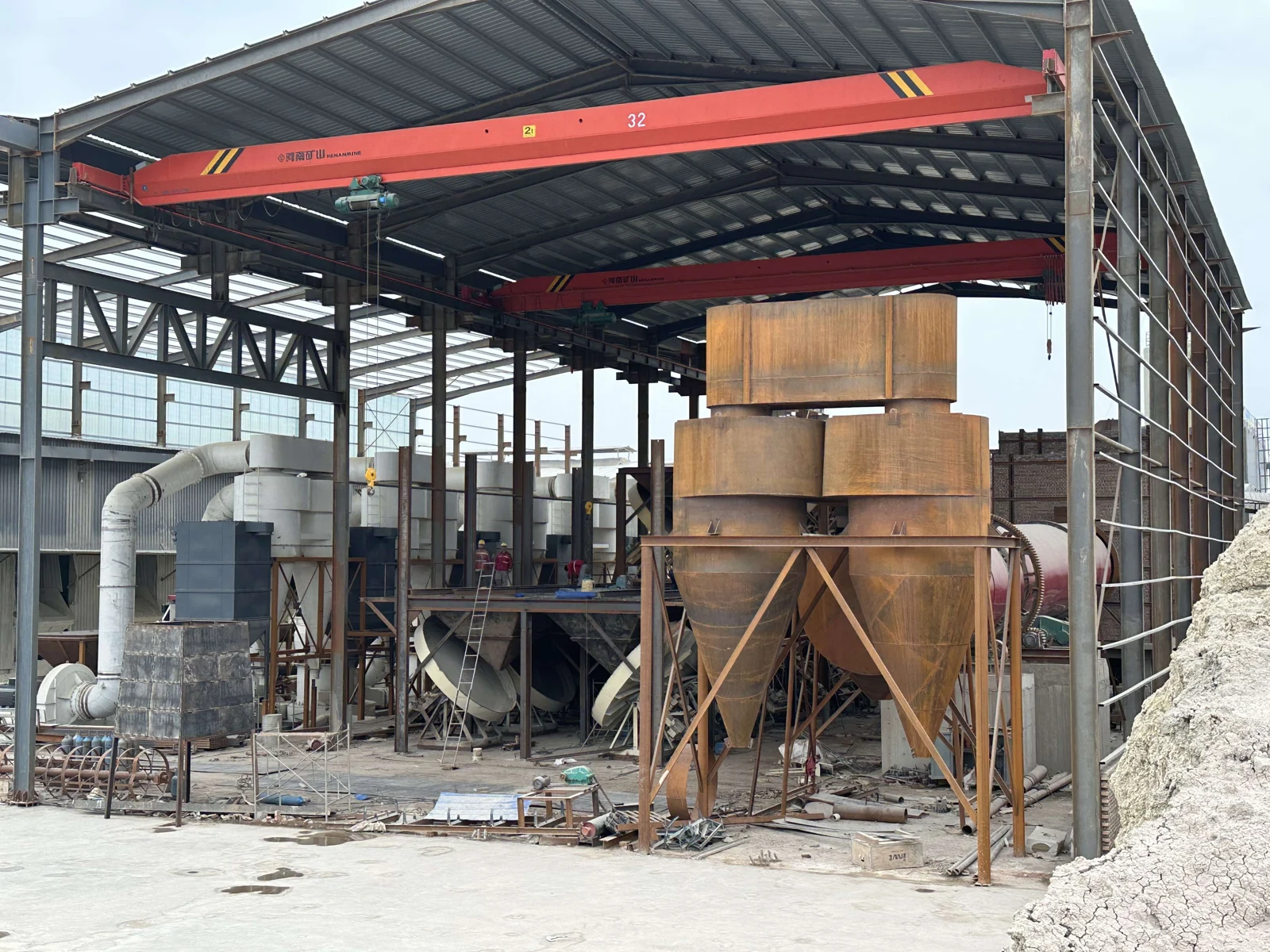
Our production-workshop photograph, identified by LINGSHUAI as drying equipment. Its role here is to show manufacturing equipment, not a used-litter recovery process.
Moisture Control Works Together with Granulation and Screening
Drying is one part of a sequence that also includes granule preparation and screening. We consider moisture together with granule condition and the finished formula.
Making litter progressively drier is not a universal route to better performance. Within a suitable range, moisture can help fine particles adhere and reduce their tendency to lift into the air; excess starting moisture may reduce further liquid uptake per unit weight and affect clumping. Those relationships require a balance in the finished specification. They do not establish a way to restore used litter by adjusting water alone.
4. How Our Clumping Performance Helps Separate Used Material
Clump Integrity Matters When the Wetted Portion Is Removed
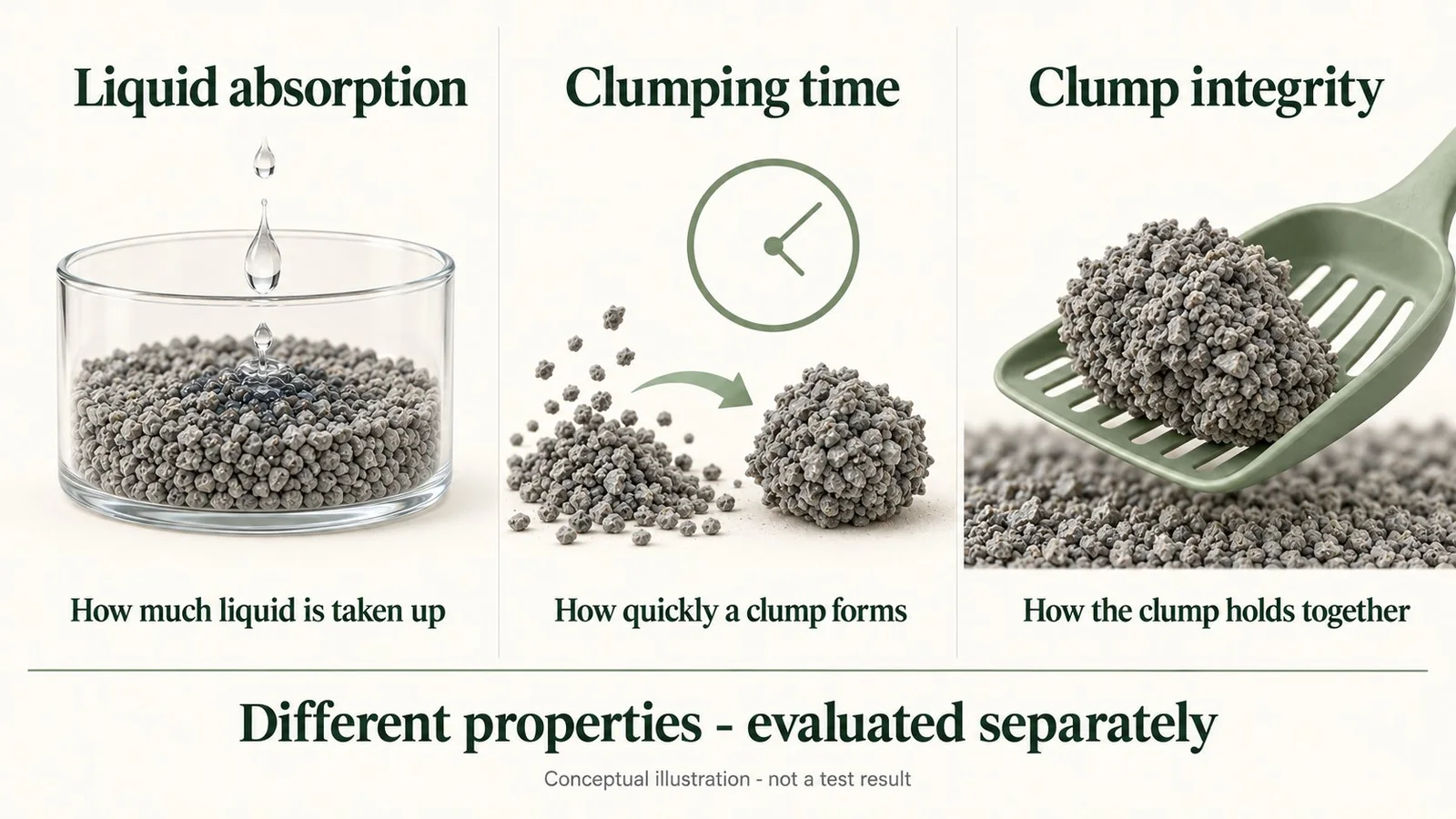
For this topic, a useful performance question is whether the wetted mass can be lifted out without readily breaking into fragments. A clump that forms quickly but breaks during removal may leave pieces behind. Formation time and handling integrity therefore describe different parts of the result.
In our product evaluations, liquid type, dose, waiting time and handling method need to be defined. A sample comparison is more informative when those conditions are consistent. It helps us discuss the separation behaviour of a particular product, rather than promise the same outcome for every formula and use condition.
Watch our GreenGuard Bentonite Cat Litter demonstration on YouTube.
What Our Pre-Shipment Checks Tell Us About Separation
Every batch follows our pre-shipment inspection process. For clumping, the relevant observations include formation, integrity during scooping and adhesion to the bottom. Granule appearance, size distribution and loose fines are also part of our documented checks.
These observations support discussions about the supplied product: how it forms a removable mass, whether that mass remains together under the stated check and how it releases from a surface. They do not measure how many times contaminated litter can be washed and returned.
Product-specific third-party reports have the same need for a defined scope. An absorption result or a clumping result describes the identified sample and method; neither is evidence of a validated reuse cycle. For this article, a relevant explanation of separation is more useful than an unrelated performance number.
5. We Do Not Define Service Life by the Number of Refills Alone
Why a Fixed Number of Reuses Would Be Misleading
“Reusable five times” would need a defined cycle and evidence showing what remains acceptable after each cycle. Simply counting refills cannot provide that evidence. A refill is an addition of fresh material, while the condition of the retained litter depends on its history of use and cleaning.
We therefore do not promise a fixed number of reuse cycles or one bag life across our bentonite range. Product formulation, actual use, removal of fragments and the condition of the litter bed all matter. A single demonstration cannot determine a universal replacement interval.
Keeping This Question Separate from Full-Replacement Frequency
Continued use of suitable remaining litter does not mean the same bed should be retained indefinitely. Our article on how often bentonite cat litter should be changed addresses the separate question of replacement frequency.
The distinction in our product explanation is simple: scooping removes used material, topping up replenishes quantity, and a full replacement removes the remaining bed. These actions serve different purposes. None turns a removed, contaminated clump back into new litter.
6. Discuss Clumping and Material Efficiency with LINGSHUAI
Our approach to material efficiency starts with developing litter that allows the wetted portion to be separated effectively. We consider granule format, formula, clump integrity and tray adhesion together, rather than describe contaminated bentonite as a washable resource.
If your project has specific requirements for removable clumps, granule size or packaging, share them with our team. Where sample comparisons are involved, the liquid dose, waiting time and handling conditions help establish a common basis for discussion.
Contact LINGSHUAI to discuss specifications and samples. Our business team will follow up with suitable product or formulation options for your requirements.
Why Does Bentonite Absorb Water and Clump? Our Manufacturing Perspective
We explain how bentonite forms clumps, how moisture affects dust and further liq…
Read more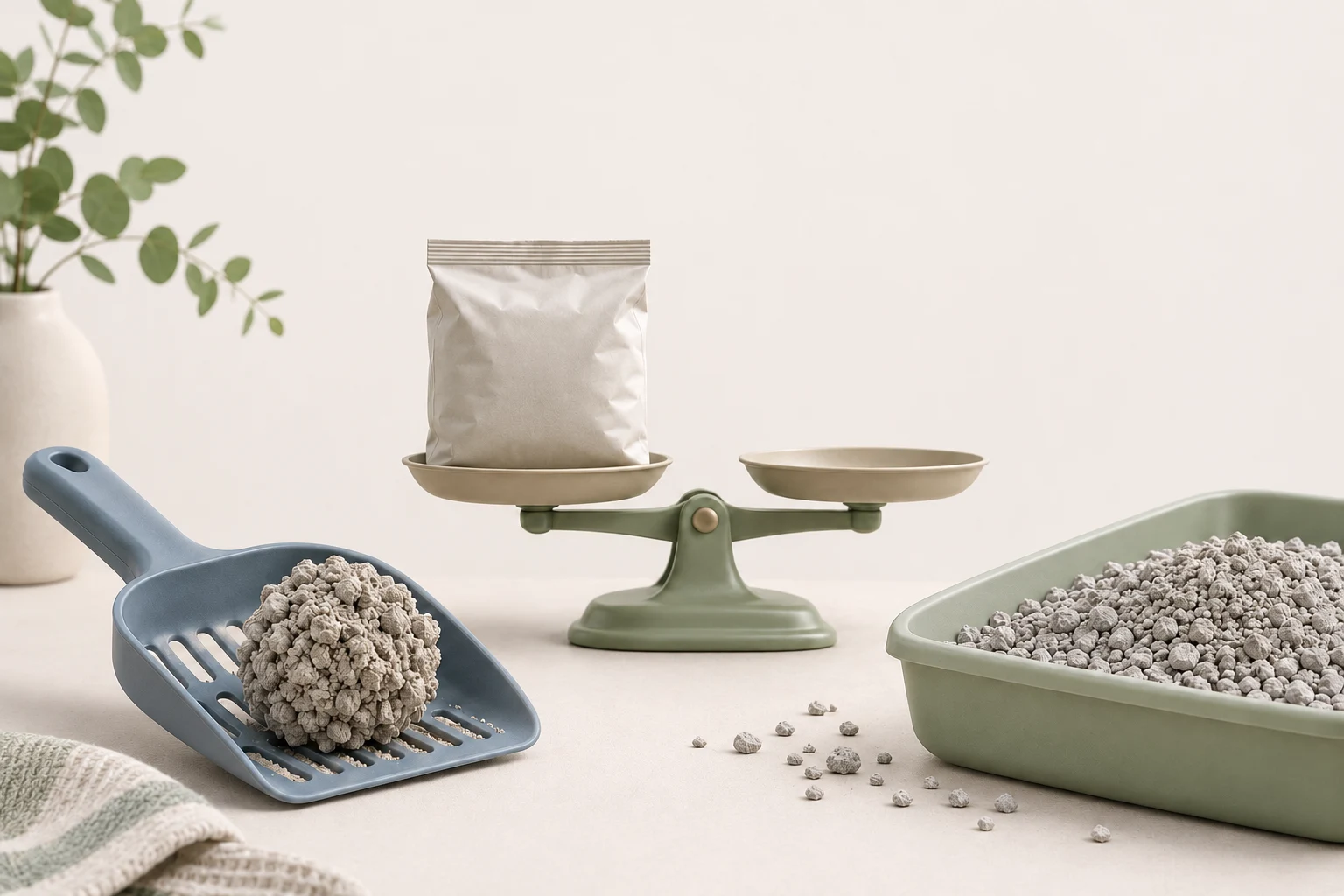
Bentonite Cat Litter Benefits and Limitations: Our Perspective at LINGSHUAI
We explain the benefits of our bentonite base and how we address dust, tracking,…
Read more