Bentonite vs. Tofu Cat Litter: What’s the Difference?
Compare bentonite and tofu cat litter for clumping, dust, tracking, weekly cost and litter box fit. Learn what to check before switching or mixing.
In this article
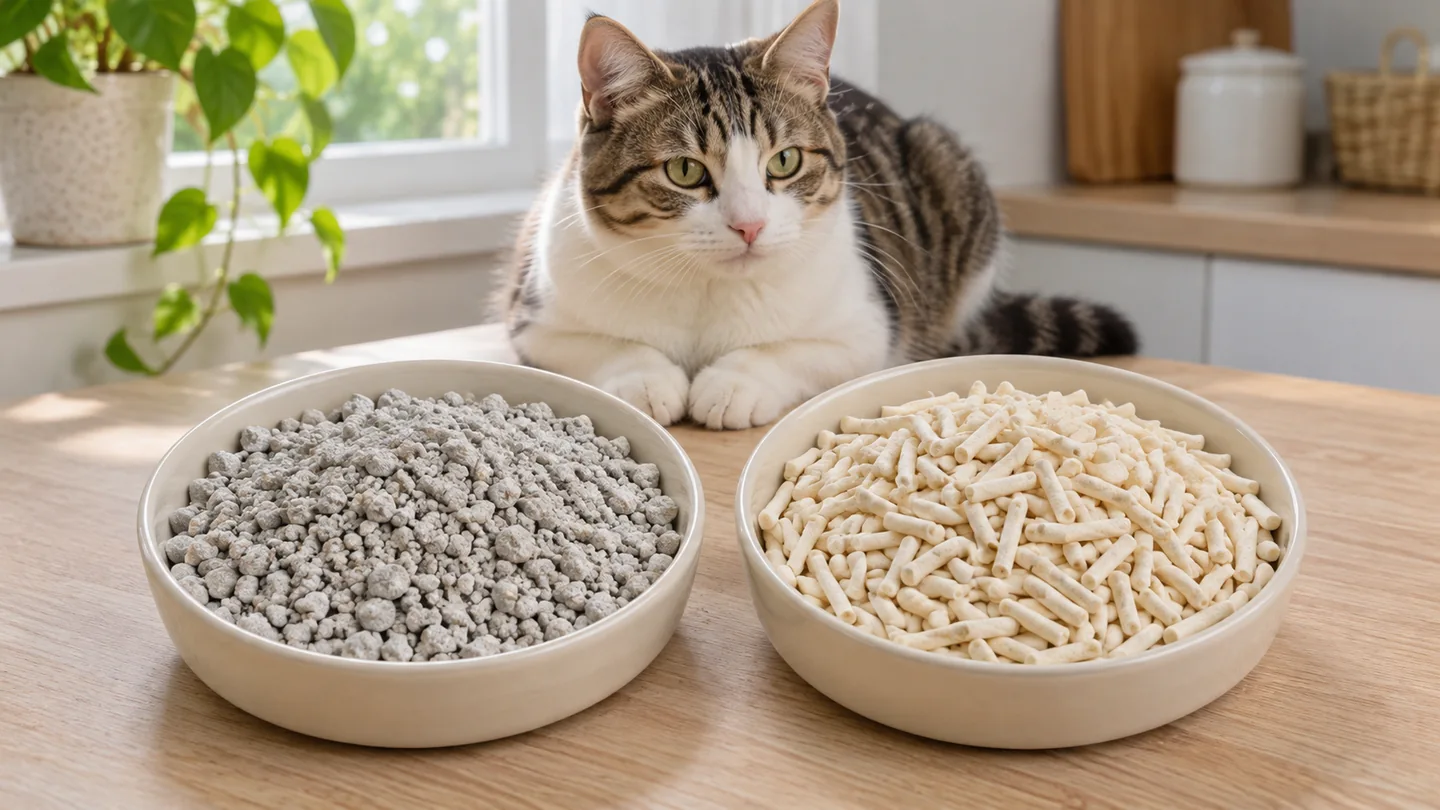
Bentonite cat litter is made from naturally occurring mineral clay that swells when wet. Tofu cat litter is typically made from plant fibers and binders and formed into pellets. Both types can clump, but how cleanly they scoop, how much dust they release, and how far they spread outside the box depend on the specific formula and particle size. If you’re deciding whether to switch, compare how the two products work in your own litter box, how much you use over the same period, and whether your cat uses the new litter comfortably. This guide shows what to check before buying and what to watch during a trial.
Bentonite vs. Tofu Cat Litter at a Glance
Start with the ingredients and particle shape on each bag. Then compare the two products on the chores you do every day, from scooping the box to sweeping up around it.
What Each Litter Is Made Of
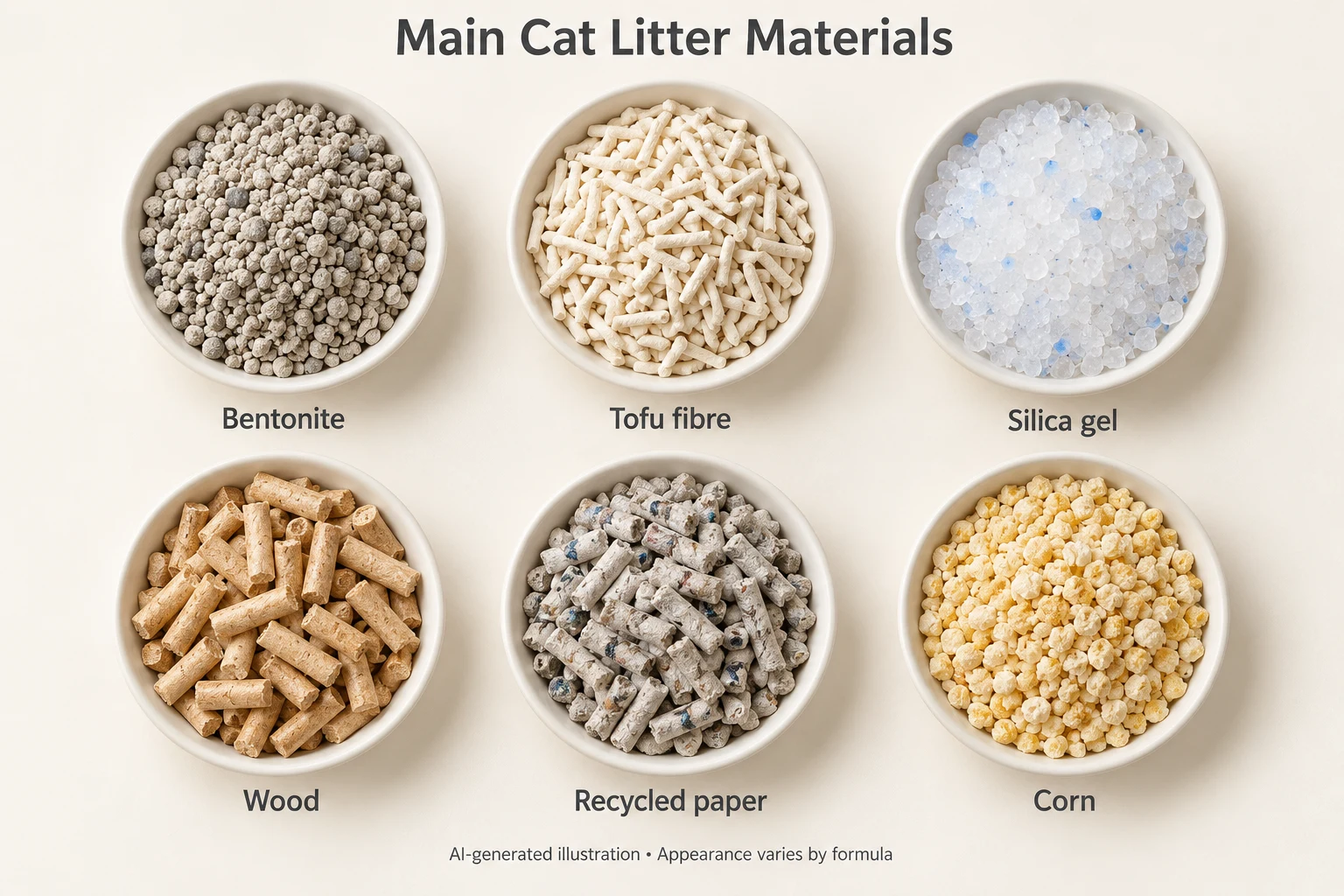
In this comparison, clay litter means clumping bentonite clay litter. Bentonite is a naturally occurring mineral clay. The clay swells when it absorbs liquid, allowing the wet granules to bind into a clump. The finished product can contain other ingredients, so check the label if you want to know what is in a particular bag. Commercial cat litter materials study
Tofu litter typically uses plant fibers, often from soybean processing. Binders help hold the fibers together so they can be formed into pellets. A plant-based label tells you about the main material. Check the full ingredient list for the binder and other additives. Some products list corn starch, for example, and some blends contain both plant pellets and bentonite. Commercial sample study · Example ingredient list
If an unused bag gives off a strong or unusual odor, set it aside and ask the manufacturer what is in the formula and whether the batch has been checked. An odor alone cannot identify the binder as its source or establish whether the product releases a substance at a harmful level. ATSDR guidance on odors and exposure
Where Bentonite and Tofu Cat Litter Differ in Everyday Use
| What to compare | Bentonite cat litter | Tofu cat litter |
|---|---|---|
| Scooping and odor | The clay granules bind when wet. Check whether the clump lifts cleanly and whether any residue sticks to the box. | The wet pellets can form a scoopable clump. Check how well it holds together. Compare odor separately for both products. |
| Dust and tracking | Look for dust when pouring or scooping and for small granules carried outside the box. | Look for dust released by loose material or broken pellets and for whole or broken pellets outside the box. |
| Weight and cost | Weigh enough granules to fill the box to its usual depth. Measure the dry litter you use over a week. | Compare the weight needed to reach the same fill depth. Use actual refill and replacement amounts to compare weekly spending. |
| Disposal | Follow the bag and local waste instructions for used litter. | Check local rules even if a plant-based product is labeled flushable. |
| Cat and litter box fit | Check how your cat responds to the feel of the granules. For an automatic box, check the model’s instructions. | Check whether your cat accepts the pellet texture. For an automatic box, confirm that the pellets can sift and the clumps can be removed. |
In one published comparison of retail samples, the bentonite sample formed stronger clumps than the tofu sample under the study’s conditions. A separate retail test found that its tofu and soy group scored better on dust and tracking on average. These results describe the products tested. The details below help you check those differences in the products available to you. Commercial sample study · Retail product comparison
What Changes When You Scoop and Clean?
A litter that looks good when you pour it may behave differently after your cat uses it. Focus on what comes out with the scoop and what stays behind in and around the box.
Clump Strength, Sticking and Odor
Liquid absorption tells you how much liquid a litter can hold. Clump strength tells you how well the wet litter stays together when disturbed. For daily cleaning, what matters is whether you can lift the clump in one piece without leaving wet fragments or a stuck layer on the bottom.
Compare the products at the fill depths their instructions recommend, and keep the wait before scooping as similar as practical. Notice whether the clump holds its shape, breaks through the scoop, or needs to be scraped off the box. Judge odor separately at a similar time after cleaning. A strong fragrance changes what you smell, so record fragrance and lingering waste odor separately.
Airborne Dust vs. Litter Tracked Outside the Box
Airborne dust is what you may see rising as you pour, rake, or scoop litter. Tracking happens when your cat carries solid particles out on its paws. Digging can scatter litter beyond the edge of the tray as well. A product can look clean when poured and still leave particles on the floor.
Observe pouring and scooping separately, then check the same area around the box after a similar period. Keep the mat and box setup consistent. Compare the actual products, since particle size, shape, and breakage can affect what you see. For more detail on how fines and airborne dust differ, see our guide to cat litter dust.
Bag Weight, Daily Cost and Disposal
A bag’s price and weight are easy to check in a store. To understand what you will carry home and pay over time, compare how much of each product your box uses and how you will dispose of it.
Equal-Volume Weight and Cost per Week
Is bentonite cat litter heavier than tofu litter? To compare two specific products, fill the same measuring container to the same mark with each dry litter and weigh each amount. That tells you which is heavier at the same volume. If the manufacturers recommend different fill depths, also compare the weight of a normal fill for each product in your own box.
For weekly cost, first divide each bag’s price by its labeled net weight to find the price per kilogram or pound. Then multiply that price by the amount of dry litter you add over a week. Use a similar cleaning routine and include routine top-ups and any full changes during that week. Record the initial fill separately if you want to compare ongoing costs. Keep the weight of wet clumps out of the calculation because they contain liquid.
What to Check Before Disposing of Used Litter
Check both the bag instructions and your local waste or wastewater guidance. A flushable label describes a product claim. Your local rules and plumbing determine how you can dispose of used litter. Check septic guidance if your home uses a septic system. The U.S. EPA advises keeping cat litter out of septic systems, and Seattle’s public utility directs households to put used cat litter in the trash. U.S. EPA septic guidance · Seattle pet waste guidance
Which Litter Fits Your Cat and Litter Box?
Choose a litter your cat will use consistently and that you can clean with your current setup. Check your cat’s response and the box’s requirements before committing to a large bag.
How to Tell Which Litter Suits Your Cat
Start with how your cat normally uses the box. During a trial, look for whether your cat enters readily, digs or covers as usual, and keeps using the box. Compare that pattern over several uses. A cat may respond to the feel of small granules, the shape of larger pellets, or the scent of a particular formula. Treat the response as a preference for the product and setup you tried. Study of cats’ litter preferences
Check Your Litter Box Before Buying
For a regular tray, make sure your scoop works with the particle size and that you can maintain the recommended fill depth. For an automatic litter box, look up the exact model. Some units require clumps firm enough to survive a cleaning cycle and dry particles small enough to pass through the screen. Whisker lists some tofu brands as compatible with Litter-Robot and identifies others that do not sift properly. Check the product and model together. Whisker’s litter compatibility guide
How to Trial a New Litter
- Buy a small bag of the new litter. If you can offer a second box, keep the current litter available so your cat has a familiar option.
- Keep the tray setup and cleaning routine as similar as practical. Change one thing at a time so you can tell what affected the result.
- Record which box your cat uses, how cleanly the litter scoops, where particles collect, and how much dry litter you add. Use the same observations for both products.
If your cat keeps choosing the familiar litter, leave that option available. The trial is useful even if you decide to stay with what already works.
Can You Use Plant-Based and Bentonite Cat Litter Together?
Some ready-made litters contain both plant-based particles and bentonite. A blend gives you a different combination of properties. It does not automatically outperform either litter on its own. Compare the finished blend with the two individual products on the problems you want to solve, such as clumps that break, dust when pouring, or litter tracked across the floor.
| What to check | Compared with bentonite alone | Compared with tofu litter alone |
|---|---|---|
| Clump removal | A blend can produce a clump with a different texture. See whether it lifts as cleanly as the bentonite clump and leaves less or more residue. | The added clay can change how wet particles bind. See whether the blend stays together better when lifted or still breaks during scooping. |
| Dust and tracking | Adding pellets changes the mix of particle shapes. Check dust when pouring and what ends up outside the box separately. | Adding clay granules introduces a second particle type. Check whether those granules are carried out along with the pellets. |
| Weight and use | Weigh a normal fill and record how much dry litter you replace over the same period. | Do the same with the tofu litter. Bag weight alone cannot tell you how much you will use. |
| Box fit and disposal | Check that both particle types can sift if you use an automatic box. | Check the blend’s own disposal instructions, even if the tofu litter you use on its own is labeled flushable. |
What to Look for in a Ready-Made Blend
Check the ingredients for both components. One retail formula, Tuft & Paw’s Really Great Cat Litter OdorStop, lists tofu pellets, pea pellets, and sodium bentonite balls. The manufacturer gives this blend different disposal instructions from its tofu-only formulas. Use evidence for the finished blend when judging how it scoops or how much dust it releases, and check the instructions for your box. Manufacturer ingredients and disposal instructions
What to Check Before Mixing Two Litters at Home
Read both product instructions and, for an automatic box, the manufacturer’s compatibility guidance before combining anything. Even if each product works on its own, a mix of granules and pellets can behave differently during sifting or scooping. If the instructions allow a trial, check whether the clumps lift cleanly and whether your cat continues to use the box. Follow local disposal guidance for the used mixture.
If you are still deciding, start with the issue you most want to improve. Compare the products you’re considering and keep a short record of what your cat uses, how the box cleans up, and what you spend. For a wider look at litter materials, see our guide to kitty litter ingredients.