Kitty Litter Ingredients: Bentonite, Plant-Based Materials, and Silica Gel
Compare bentonite, plant-based and silica gel cat litter. See how their ingredients affect clumping, dust, tracking and daily cleanup.
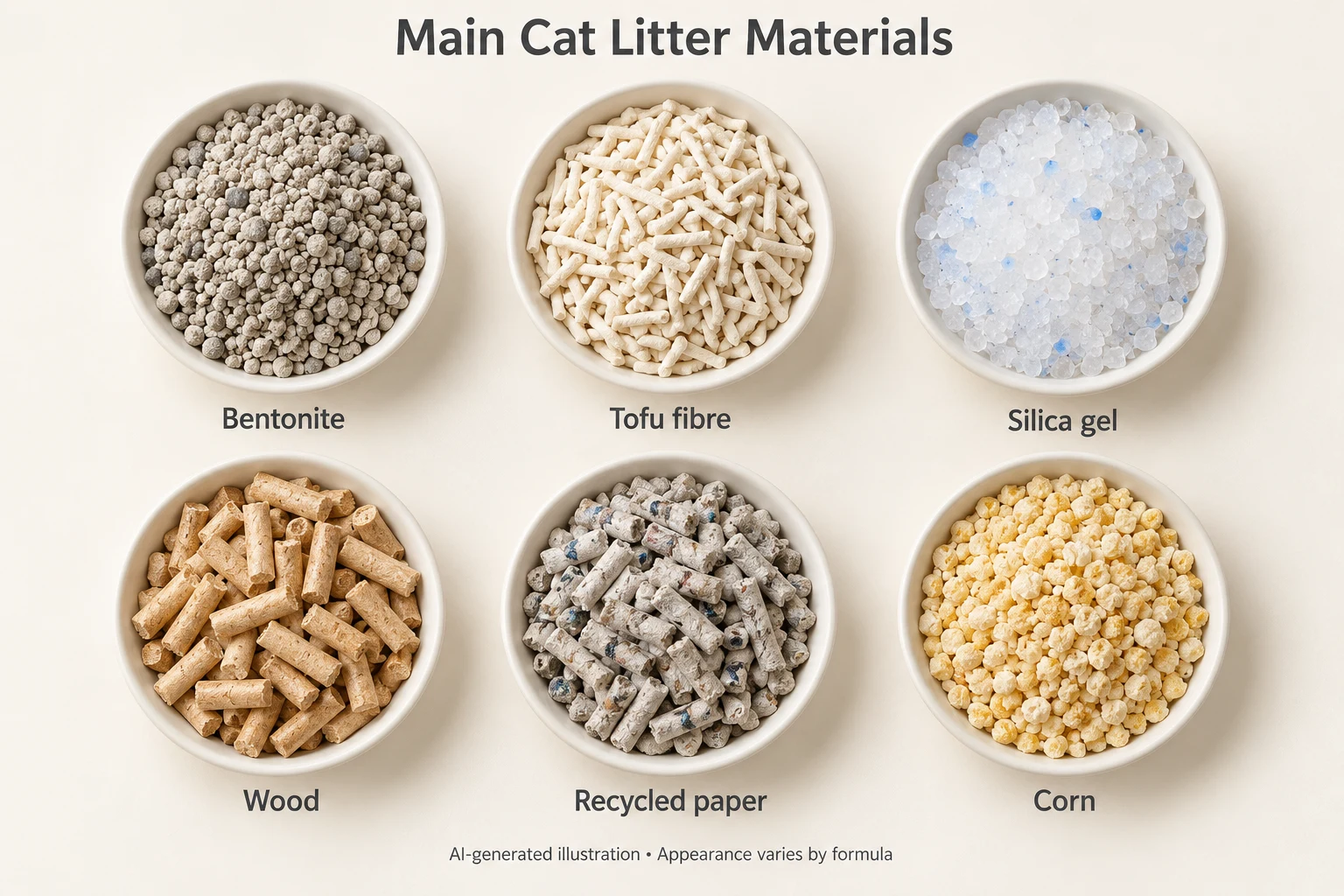
The main kitty litter ingredients are clay such as bentonite, plant materials such as soy fibre or wood, and porous silica gel. The difference becomes easier to see after the litter gets wet. Clumping bentonite forms a mass you can lift with a scoop. Some wood pellets break down into sawdust. Ordinary non-clumping silica crystals take up liquid and stay in the tray until they are replaced. Those behaviours explain much of the difference in daily cleanup.
1. What Are the Main Cat Litter Materials?
Bentonite, plant-based materials and silica gel are three common bases. Recycled paper and other minerals, such as diatomite, are also used in some litters. The list of ingredients in cat litter tells you what the product is primarily made of.
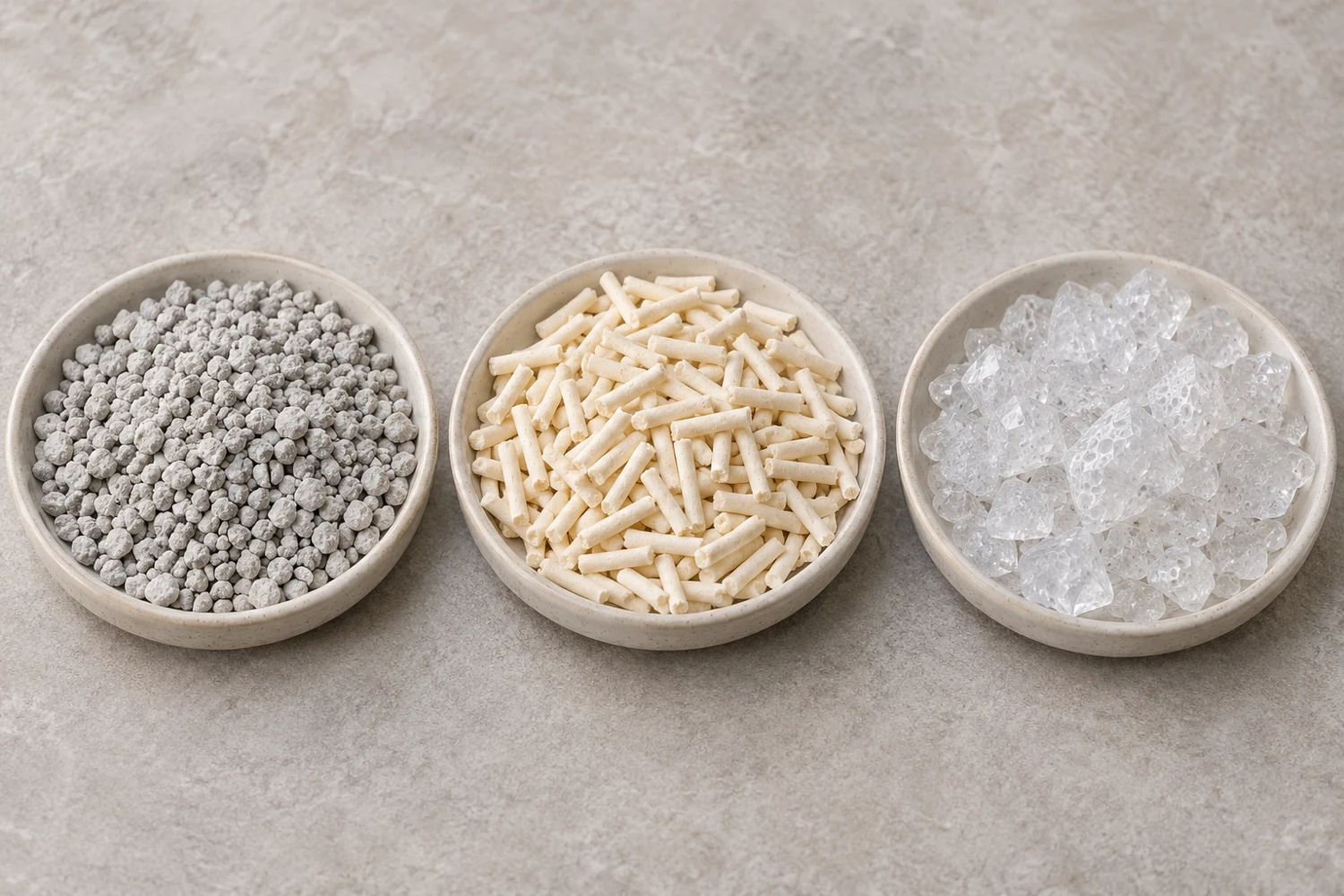
Base Materials, Blends, and Functional Additives
A tofu-and-bentonite blend combines two litter materials. A bentonite litter with activated carbon uses bentonite as the base and carbon as an ingredient intended to help control odour. Fragrance is another addition, with a different purpose: it gives the litter a scent. These distinctions matter because two bags labelled “bentonite” may use different particle sizes, fragrances or additives.
Once you know what the base is, the next question is what happens to it when liquid reaches the tray.
2. What Is Bentonite Cat Litter, and What Are Its Benefits and Limitations?
Bentonite is a naturally occurring clay used in many clumping cat litters. In a clumping formula, the wet portion gathers into a mass that can be scooped out while the surrounding loose granules remain in the tray.
What Is Bentonite, and Why Does It Clump When Wet?
Bentonite contains clay minerals that can take up water and swell. In clumping litter, neighbouring wet granules stick together as the clay hydrates. How soon the clump forms and how well it holds together when lifted are separate observations. A clump may appear quickly and still leave fragments behind when scooped.
Why Does Natural Bentonite Need Processing?
Raw bentonite can vary in moisture, lump size and material properties. In its mined state, it does not have the controlled particle size needed for a litter tray. Processing gives the finished granules a specified size range and makes their handling and clumping easier to assess from one batch to the next.
What Processing Steps Turn Raw Bentonite Into Finished Granules?
A production route can include drying the raw material, sodium activation where the clay and process require it, grinding and forming the granules. The granules are then dried and screened to the intended size range. Some routes include crushing to produce an irregular shape. Dust collection can be used at relevant stages such as drying and screening. See how bentonite is processed into finished cat litter.
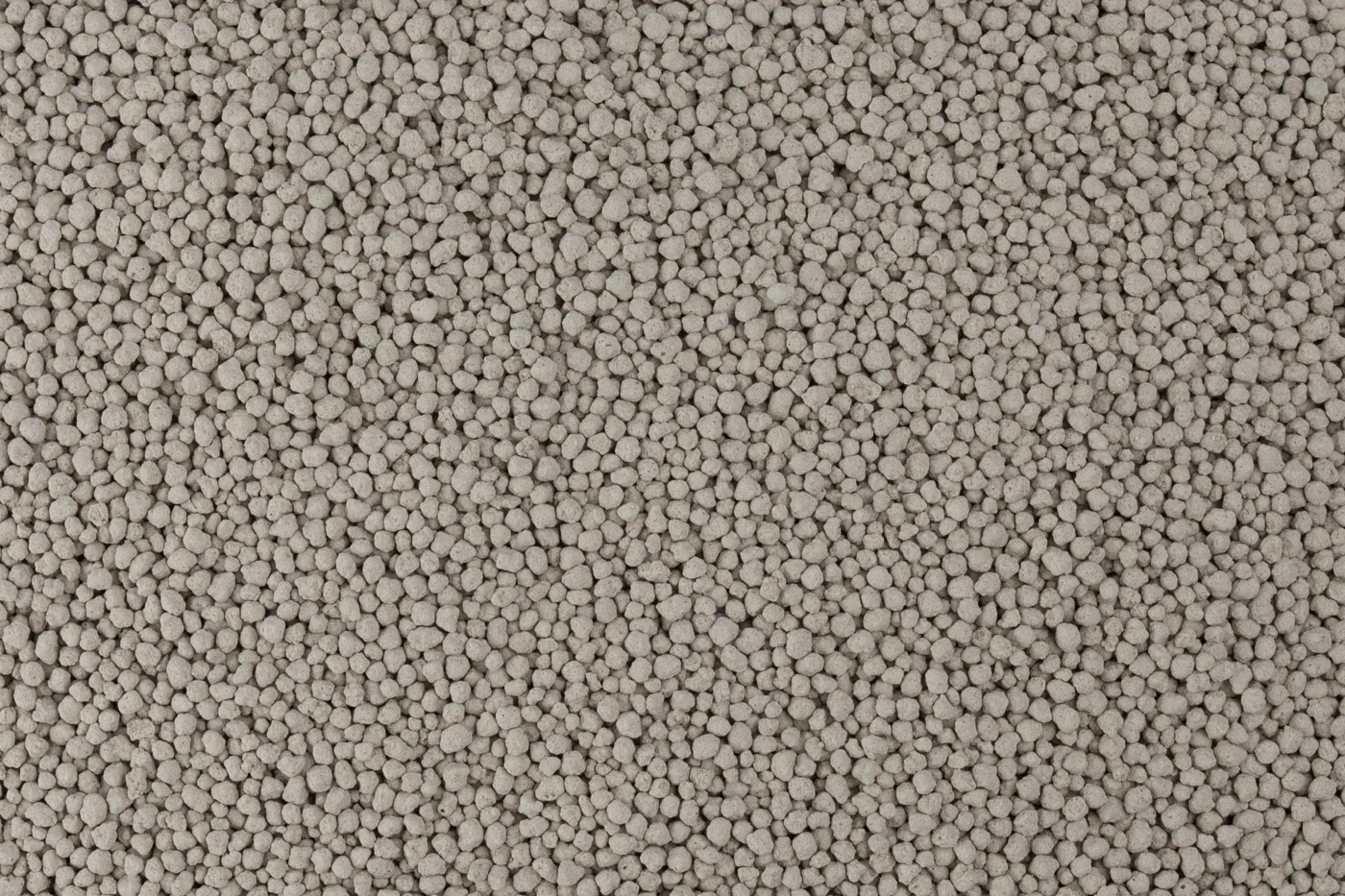
Benefits and Limitations of Bentonite Cat Litter
The main advantage is selective cleanup: a clumping formula lets you remove the wetted area without emptying the tray each time. The trade-offs can include a heavier bag, dust when pouring, and granules carried out of the tray. A wet clump can also stick to the tray bottom or break during removal. Particle size, moisture and the finished formulation all matter when comparing those behaviours.
Clumping is also possible with plant materials, though plant-based litters take several different forms.
3. What Is Plant-Based Cat Litter, and What Are Its Benefits and Limitations?
Plant-based cat litter uses materials such as plant fibre, starch or wood. The ingredients and how they are formed determine whether the litter makes a scoopable clump or breaks apart after it gets wet.
What Are Tofu, Cassava, Grain-Based, and Wood Pellet Litters Made Of?
Tofu-style pellets can use soy or pea fibre. Cassava and grain formulas can use starch-rich ingredients such as cassava, corn or wheat. Wood pellets can be made from compressed sawdust. A product may combine ingredients to give the granules the intended shape or wet behaviour.
Why Do Some Plant-Based Litters Clump While Others Break Down?
In a clumping tofu formula, the wet pellets bind into a mass that can be scooped. Some non-clumping wood pellets soften and crumble into sawdust when wet. With a compatible sifting tray, the broken-down material can be separated from the intact pellets. These are two different ways of removing the used portion.
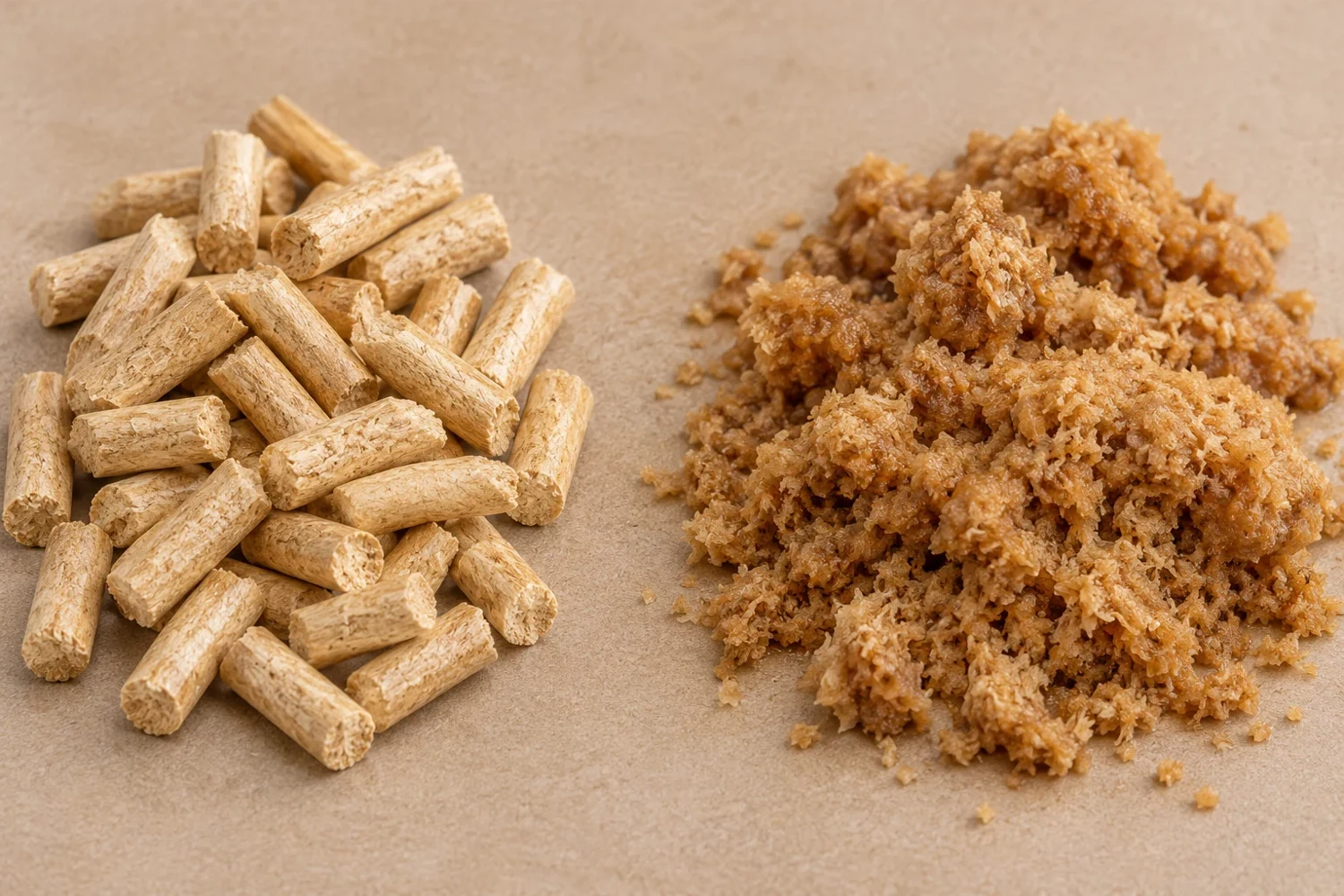
Benefits and Limitations of Plant-Based Cat Litter
Some formulas are lighter to carry than conventional clumping clay. Pellets also offer a different texture underfoot. How well the litter holds together, how much fine material it leaves and how it behaves in humid storage depend on the formula. A pellet can also be kicked or carried out of the tray even when little dust is visible.
The key distinction is how the finished pellet behaves when wet. Silica gel offers a third example: liquid can stay inside the granules.
4. What Is Silica Gel Crystal Cat Litter, and What Are Its Benefits and Limitations?
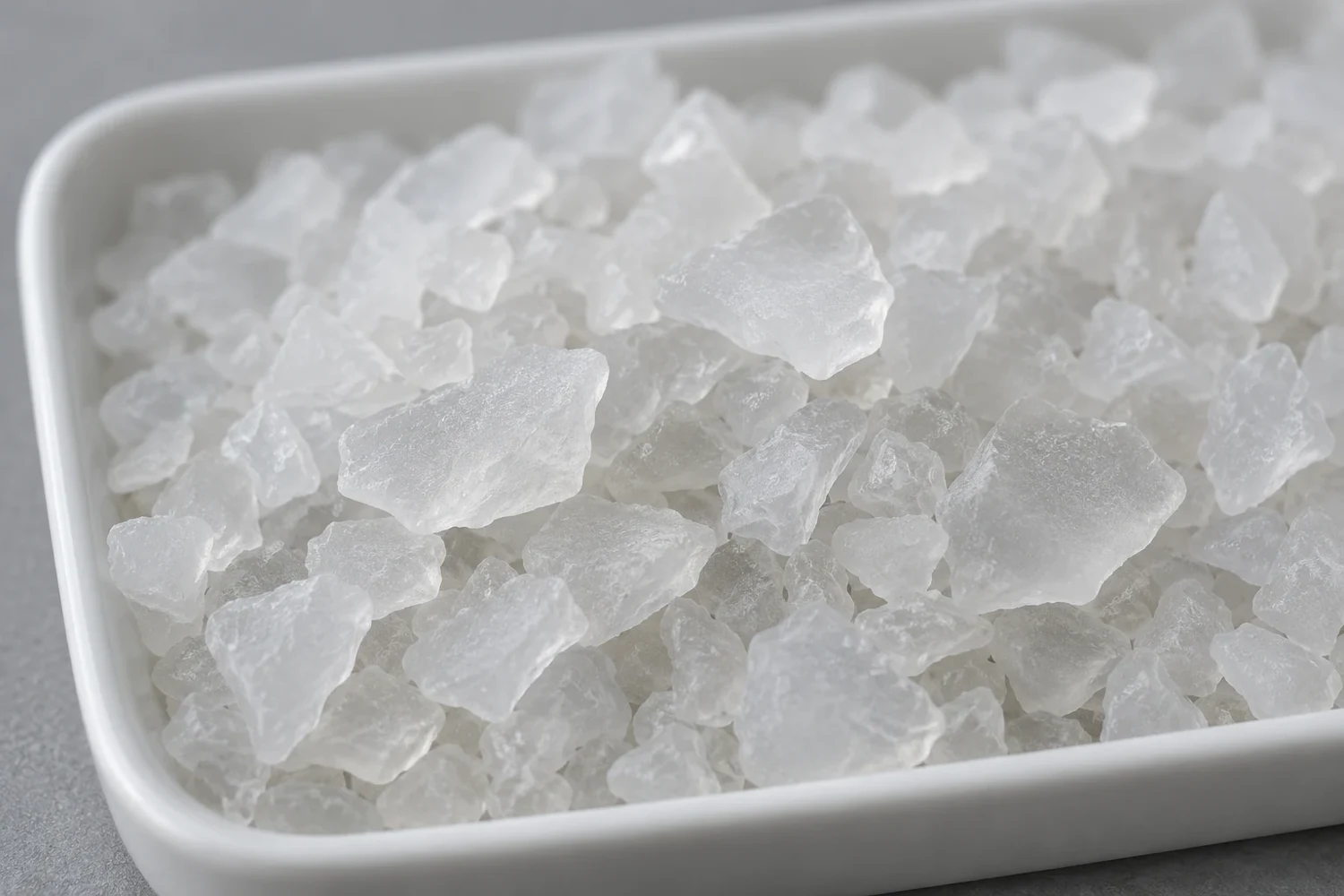
Crystal cat litter is commonly made from porous silica gel granules. In an ordinary non-clumping formula, the granules take up urine without forming a scoopable mass.
What Is Crystal Cat Litter Made Of, and How Do Its Pores Take Up Liquid?
Silica gel has a network of tiny pores that take up and hold moisture. In a non-clumping litter, the wetted crystals remain in the tray after they have taken up liquid.
How Are Non-Clumping Crystals Cleaned, and How Do Clumping Versions Differ?
With conventional non-clumping crystals, you remove solid waste and replace the crystals as directed for the product. Some formulations call for stirring to distribute moisture through the litter bed. Clumping silica formulations are also available, so check the product description before assuming the urine will remain in loose granules.
Benefits and Limitations of Silica Gel Cat Litter
Non-clumping crystals provide a way to manage liquid without lifting a urine clump after each use. The trade-off is that used crystals remain mixed into the litter bed until it is changed. Replacement depends on the product and how heavily the tray is used. The texture of larger or irregular crystals can also feel different to a cat accustomed to fine granules.
Silica and plant materials both come in more than one format. Comparing their typical wet behaviour makes the differences easier to see.
5. Key Differences Between Bentonite, Plant-Based, and Silica Gel Cat Litter
The most practical difference is what you remove from the tray during cleanup: a wet clump, broken-down pellet fragments, or the litter bed once the crystals need replacing.
How Do Liquid Absorption, Clumping, and Cleanup Differ?
| Litter material and format | Typical change after wetting | What cleanup involves |
|---|---|---|
| Clumping bentonite | Wet granules gather into a clump. | Lift the clump and remove solid waste. |
| Clumping plant-based formula | Wet pellets or granules bind together. | Scoop out the wet clump. Its strength depends on the formula. |
| Non-clumping wood pellets that break down when wet | Wet pellets crumble into finer material. | Separate the broken-down material from intact pellets in a compatible tray. |
| Non-clumping silica gel crystals | Granules take up liquid without forming a clump. | Remove solid waste and replace the crystals according to product instructions. |
How Do Texture, Dust, Tracking, and Weight Differ?
For texture, compare the size and feel of the actual granules or pellets. For dust, look at the fine material released while pouring or scooping. Tracking is what ends up outside the tray and can include whole pieces. For weight, compare equivalent volumes when the question is how heavy a tray fill will be. These checks describe separate parts of daily use, so a litter that improves one may behave differently on another.
That leaves two practical questions: whether your cat will use the litter and whether the corresponding cleanup routine works for your household.
6. Which Cat Litter Material Fits Your Cat?
Start with the texture and scent your cat already accepts, the kind of tray you use and how you prefer to remove soiled litter.
What Textures and Scents Does Your Cat Accept?
If your cat reliably uses a fine, unscented litter, switching to larger scented pellets changes both the surface underfoot and the smell. Keeping one of those features familiar makes it easier to observe how your cat responds to the other. The particle feel matters even within one material family.
How Do the Litter Box and Cleaning Routine Affect the Choice?
If the household relies on frequent spot scooping, consider how easily the wetted portion can be lifted. A sifting tray can suit pellets designed to break down, while non-clumping crystals involve a different replacement routine. For a self-cleaning box, check the device’s requirements for granule size and clumping before changing litter.
If you’d like to see how particle shape and size can vary within one material, our LINGSHUAI bentonite range shows examples of round, fine-grain and crushed formats.

