Kitty Litter Ingredients: Bentonite vs Plant-Based Materials
Learn the main cat litter materials, how bentonite is processed, and what LINGSHUAI formulas and product-specific tests can tell buyers.
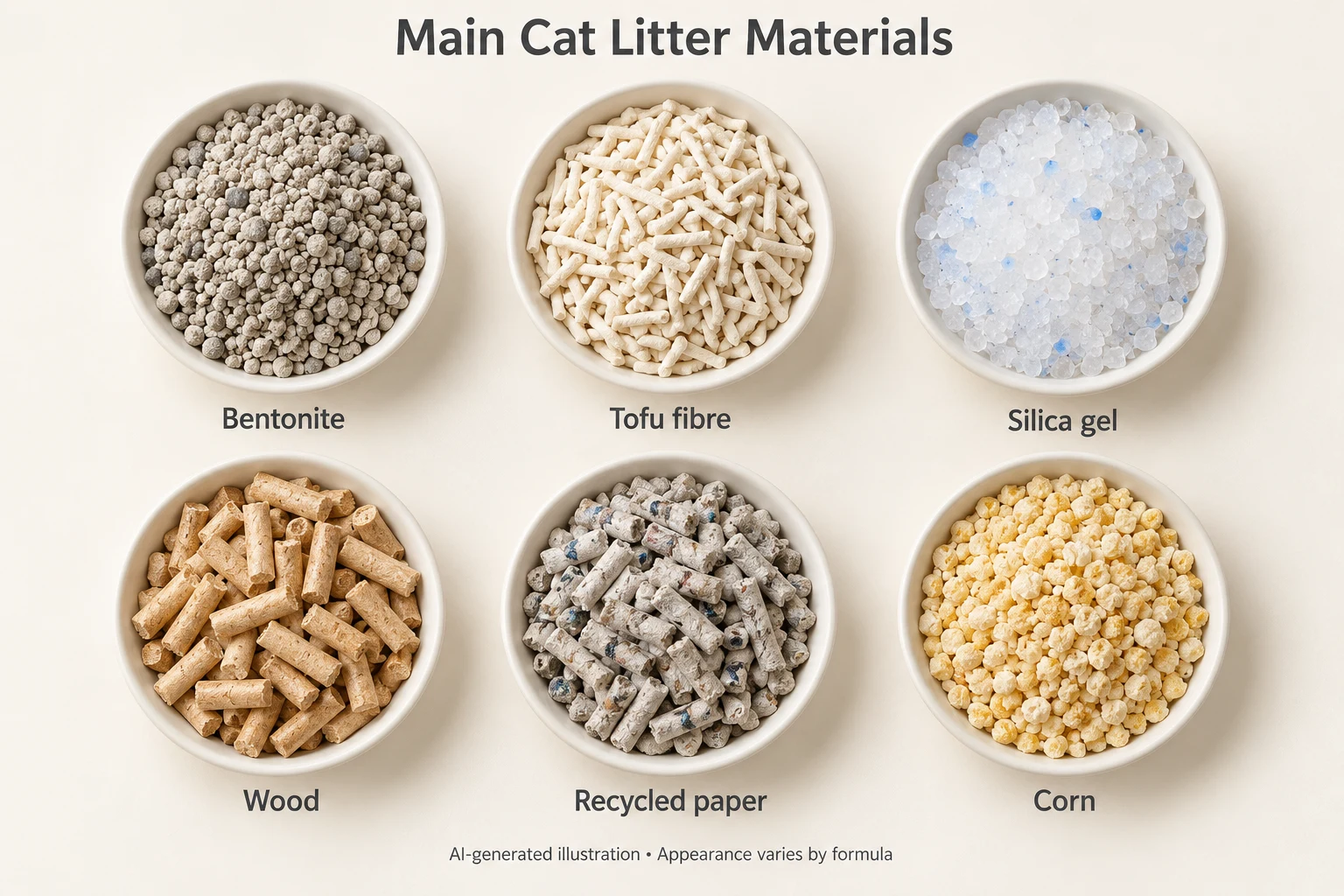
Cover illustration generated with AI; appearance varies by formula.
The main types of cat litter are clay and mineral litter, silica gel crystals, and litter made from plant materials or recycled paper. Bentonite is a clay used in clumping litter; plant-based options include tofu fibre, wood, corn, wheat, cassava and walnut shell. Some products combine more than one material.
Understanding kitty litter ingredients is a useful starting point, but the material name does not describe the whole product. Granule size, processing, added ingredients and quality control all affect the finished litter. This guide focuses on bentonite, LINGSHUAI’s main product material, and explains how to compare it with plant-based alternatives without relying on broad claims about either category.
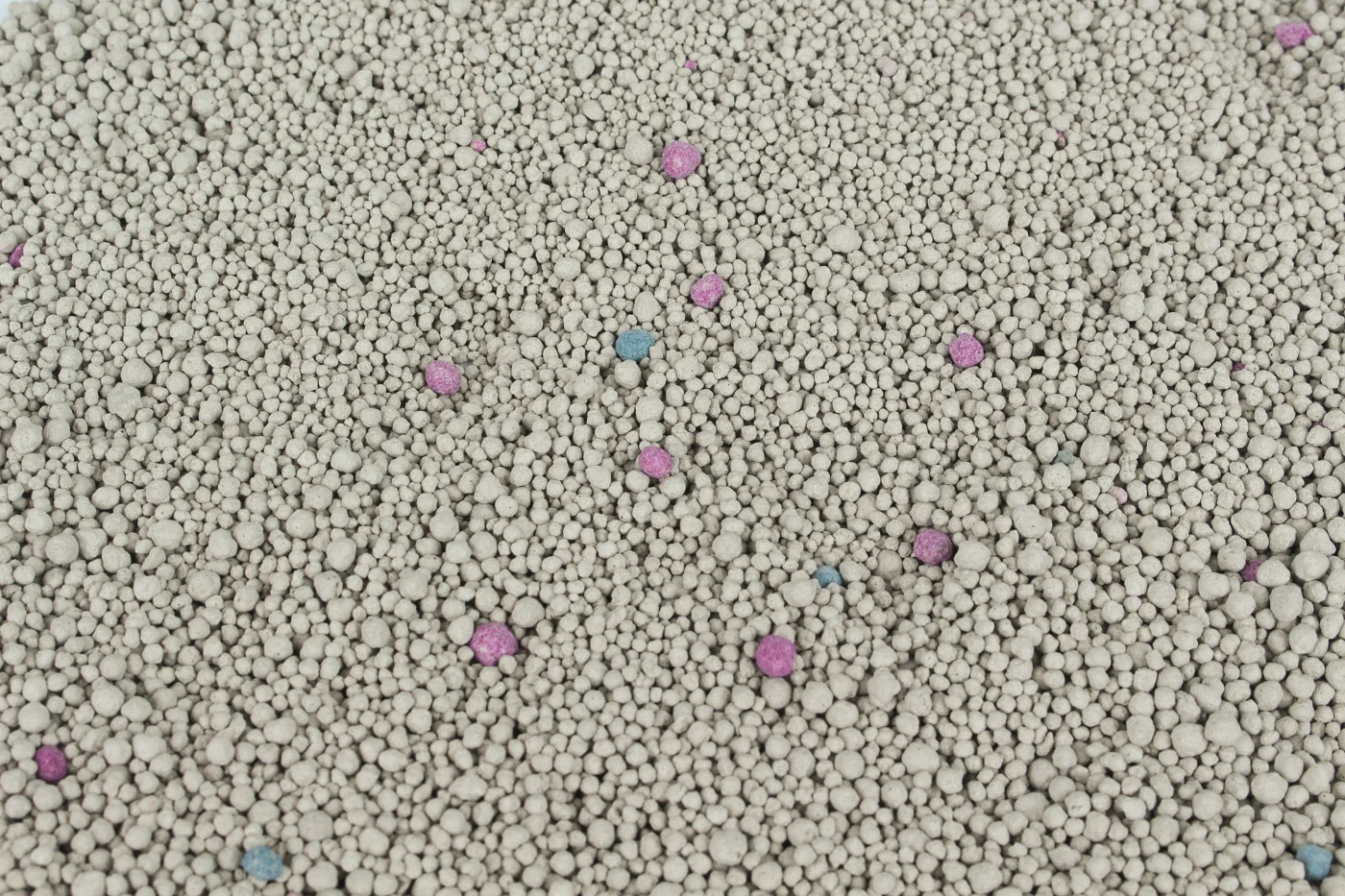
LINGSHUAI Ball Bentonite Cat Litter. The pictured sample shows the granular format; colour alone does not identify the function of an added particle.
What Are the Main Kitty Litter Ingredients?
Material, shape and performance describe different things. “Bentonite” identifies a material, “pellet” describes a shape, and “clumping” describes behaviour after wetting. A pellet is not necessarily made from wood, and a mixed litter may contain both mineral and plant ingredients.
| Material group | Common examples | What to check |
|---|---|---|
| Clay and minerals | Bentonite and other absorbent minerals | Whether it clumps, particle size and the cleaning routine |
| Silica gel | Porous silica gel crystals | Moisture handling, replacement instructions and texture |
| Plant fibre and agricultural materials | Tofu fibre, corn, wheat, cassava and walnut shell | Actual ingredients, binders and wet-clump behaviour |
| Wood | Pine and other wood-based granules or pellets | Whether wet pellets break down and whether a sifting tray is needed |
| Recycled paper | Paper pellets or granules | Absorption, clumping status and replacement routine |
| Mixed materials | Mineral blends or plant-and-mineral formulas | The base material and the purpose of each added ingredient |
When reading a list of kitty litter ingredients, separate the base material from functional additions. These categories help narrow the choice. They do not establish a universal winner for dust, odour control or safety. Those questions need evidence for the finished formula.
Bentonite Cat Litter and How the Mineral Works
What Is Bentonite and How Does It Form Clumps?
Bentonite is a naturally occurring clay rich in smectite minerals. Its interaction with water makes it useful as an absorbent and, in suitable formulations, a clumping material. Sodium bentonite is used as a clumping agent in cat litter, as described by the USDA Agricultural Research Service.
In a litter tray, the practical aim is to collect wetted litter into a portion that can be removed. Absorption and clump strength are related parts of that process, but they are not interchangeable measurements. A litter can take up liquid yet produce a clump that breaks during scooping. We check liquid handling and clump integrity separately after the agreed waiting time.
What Processing Does Natural Bentonite Still Need?
Natural mineral origin does not mean that finished litter is unprocessed. LINGSHUAI’s documented production routes include drying the raw bentonite, grinding it, forming or crushing the material, drying again, and screening to the target particle-size range. Dust collection is included at relevant stages.
Where required by the process, calcium bentonite undergoes alkali treatment for sodium activation. Spherical products use pan granulation; the documented crushed-product route uses a double-roll crusher. Ingredients such as carbon granules, coloured particles or fragrance are added according to the selected formula.
We explain how processing affects the finished bentonite specification, including particle-size control, moisture management, and removal of loose fines. We agree the applicable finished-product checks with you before production.
Why Can Two Bentonite Litters Perform Differently?
LINGSHUAI’s range illustrates the difference between a base material and a finished specification. Ball Bentonite Cat Litter has a reference particle-size range of 1–3.5 mm. Bentonite Millet Cat Litter uses finer granules, with a reference range of 0.5–1.44 mm.
Shape and size can affect how litter feels underfoot, how it passes through a scoop, and how particles spread around a wet area. Tracking also depends on the cat’s digging and exit behaviour, litter depth and the surrounding floor area. A size specification alone cannot establish that a litter will never track.
For a meaningful sample comparison, keep litter depth, liquid volume, waiting time and scoop the same. Record whether clumps lift intact, how much dry litter is removed with them, and whether material remains on the tray base. This produces a clearer purchasing decision than comparing material names alone.
Watch the LINGSHUAI clumping demonstration on YouTube
Bentonite Versus Plant Based Cat Litter
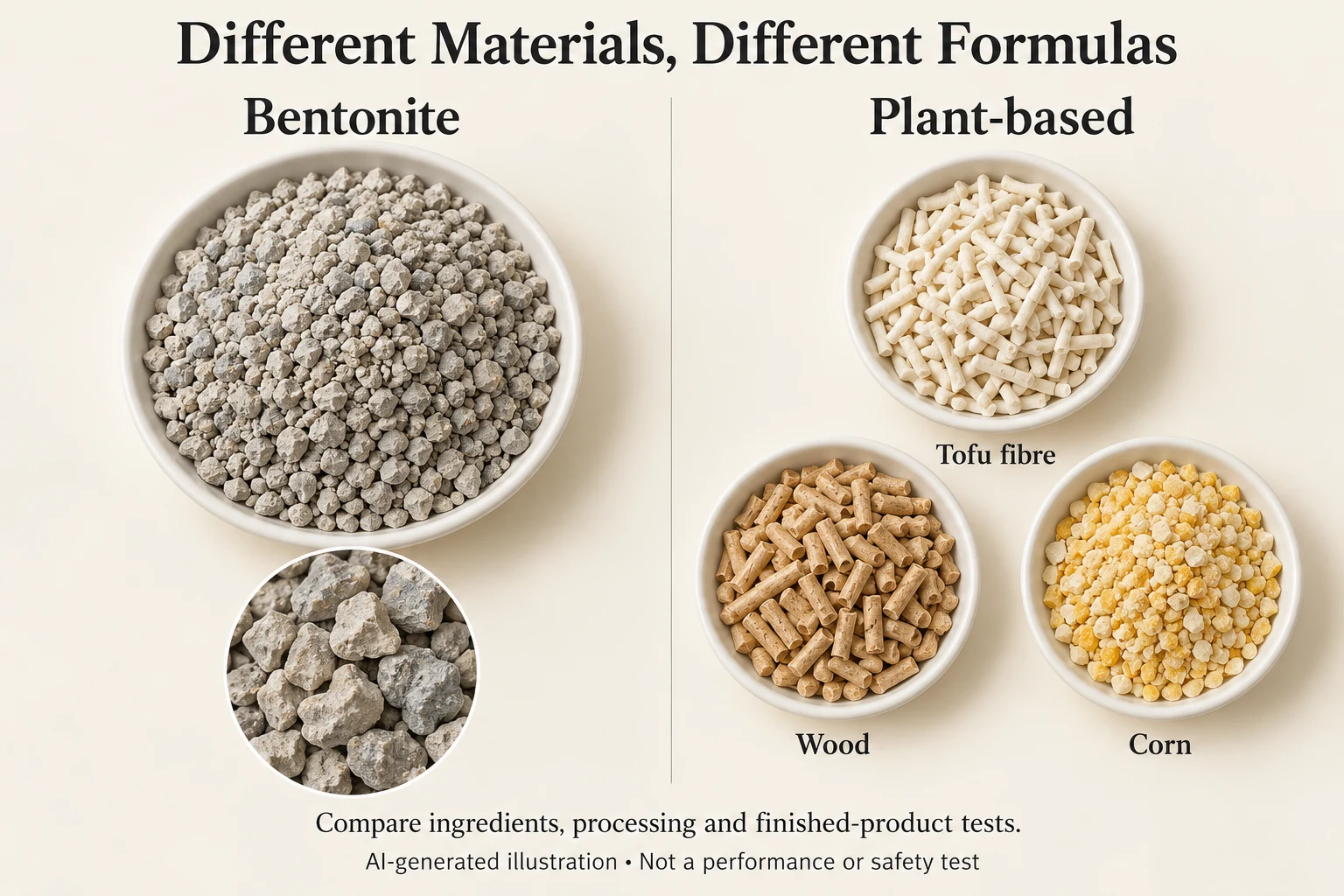
Raw Materials Processing and Added Ingredients
The clearest distinction is the starting material. Bentonite litter begins with a mineral clay. Plant-based litter begins with materials such as plant fibre, starch-bearing crops, wood or shells. Finished formulas can contain additional ingredients in either category.
A plant-based label does not tell you whether a product contains a binder, fragrance or mineral component. Equally, a bentonite label does not establish that the formula contains clay alone. Ask for the composition of the actual product rather than assuming that every member of a category uses the same recipe.
| Comparison | Bentonite litter | Plant-based litter |
|---|---|---|
| Base material | Mineral clay | Plant-derived fibre, wood, starch-bearing material or shell |
| Processing questions | Activation where applicable, granulation or crushing, drying and screening | Preparation of the plant material, shaping, drying and any binder system |
| Clumping assessment | Check wetting, clump formation and resistance to breakage | Check whether the particular formula clumps and how the wet structure holds together |
| Added ingredients | Check the selected mineral blend, carbon, fragrance and other additions | Check binders, fragrance, mineral components and other additions |
| Everyday evaluation | Scoop behaviour, loose fines, tracking and consumption | Scoop or sifting behaviour, loose fines, tracking and consumption |
| Storage and handling | Follow the finished product’s packaging and storage instructions | Follow the finished product’s packaging and storage instructions |
Clumping Cleaning and Everyday Consumption
When comparing types of cat litter pros and cons, start with the cleaning system. A scoopable clumping litter and a pellet litter intended to break down when wet may need different trays and routines. Comparing them only by bag price overlooks that difference.
For purchasing trials, record the starting amount, the amount removed during cleaning, top-ups and full replacements over a defined period. If products are sold in different units, compare both weight and volume where measured. Do not apply one product’s litre-to-kilogram conversion to another material.
Cat acceptance also matters. A material that suits the preferred cleaning routine still needs an acceptable texture and scent for the cat using it. That cannot be established from a supplier’s clumping demonstration alone.
Does Natural or Plant Based Automatically Mean Safer?
Neither term is a complete safety assessment. “Chemical-free” is also an unhelpful distinction: both minerals and plant materials have chemical compositions. Processing or the presence of an added ingredient, by itself, does not demonstrate that a finished litter is harmful.
The useful questions concern the actual ingredients, their intended function, relevant contaminant testing and dust measurements. Mineral composition and exposure conditions matter when assessing clay materials; the WHO’s technical review of bentonite and other clays discusses those factors. That review is background information, not certification of any LINGSHUAI product.
We explain our actual formulations and the scope of their tests. Our product-specific results do not establish that all bentonite litter is safer than all plant-based litter.
Ingredients in Cat Litter and LINGSHUAI Bentonite Formulas
Round and Fine Granules
We offer different bentonite particle formats. Our Ball Bentonite Cat Litter provides the spherical option, while our Bentonite Millet Cat Litter provides the finer-granule option.
The latter name describes a fine bentonite product; it does not mean that the litter is made from millet grain. This distinction is especially useful when comparing mineral and plant-based materials.
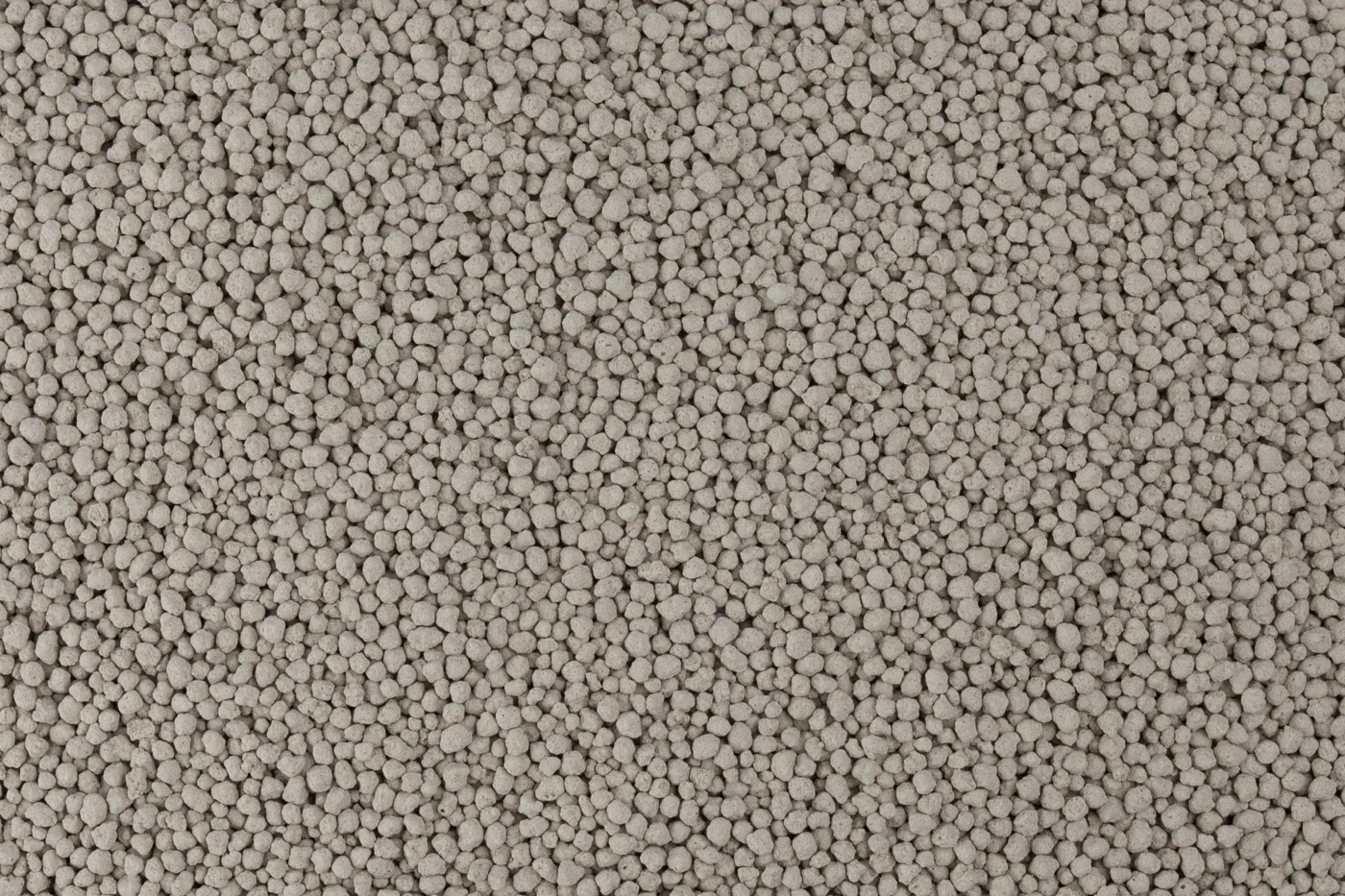
LINGSHUAI Bentonite Millet Cat Litter. The documented reference particle-size range is 0.5–1.44 mm; the photograph is not a scale measurement.
Zeolite and Carbon Formulas
GreenGuard Bentonite Cat Litter is documented as a zeolite-and-bentonite blend, with a reference particle-size range of 0.5–2 mm. Zeolite is a mineral ingredient used for adsorption and ion-exchange functions. Its presence explains a formulation choice; a percentage claim about odour removal still needs a relevant finished-product test.
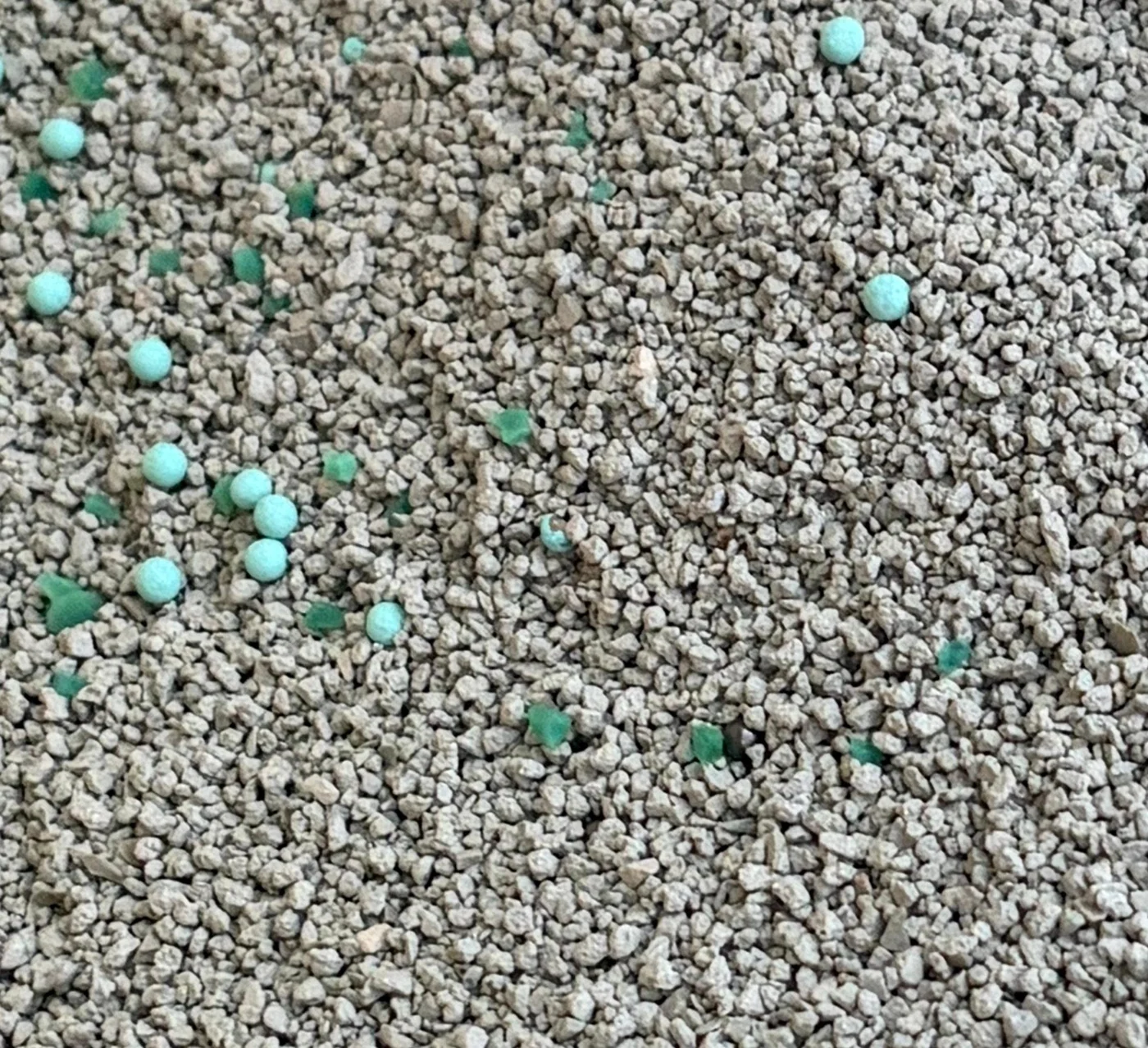
LINGSHUAI GreenGuard sample. The product specification identifies the zeolite blend; the photograph shows appearance rather than chemical composition.
The range also includes Crushed-type Carbon Bentonite Cat Litter, with a reference particle-size range of 0.5–2 mm. Carbon-containing ingredients can support odour-control formulation, but their composition and function should be established from the specification. Dark colour alone does not measure adsorption capacity.
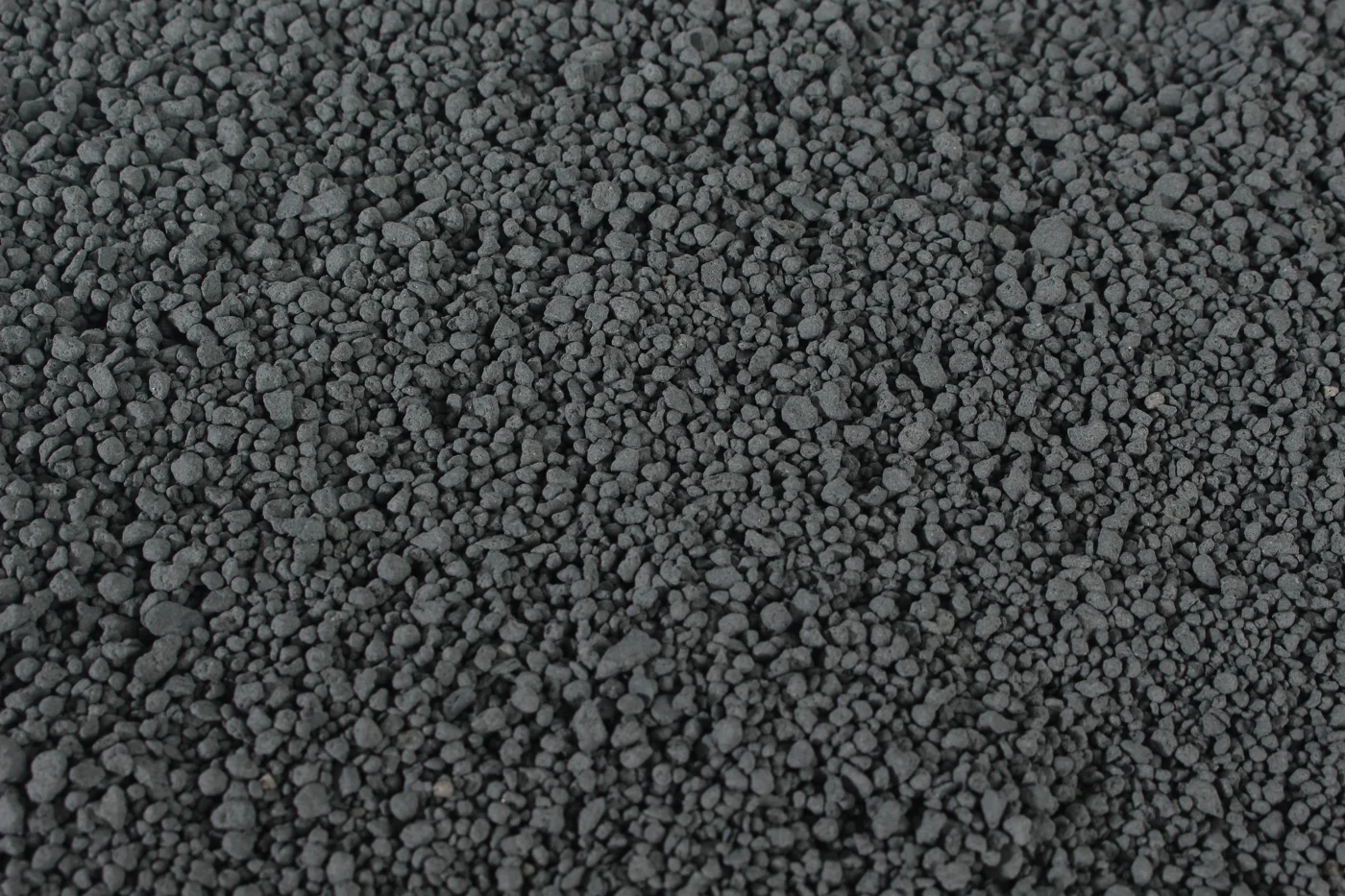
LINGSHUAI Crushed-type Carbon Bentonite Cat Litter, showing its dark, irregular granular appearance.
Our Product-Specific Test Results
Material explanations become more useful when linked to a named product and measured result. The following selected results belong to Ball Bentonite Cat Litter. They are not specifications for every LINGSHUAI formula.
Report A2260307543101001C
| Test item | Result | Method |
|---|---|---|
| Formaldehyde content | Not detected, below 1.0 mg/kg | T/SDPIA 05-2022 Appendix G |
| Aflatoxin B₁ | Not detected, below 2.0 μg/kg | NY/T 2071-2011 |
| Powder content* | 0.4% | With reference to T/ZGXX 0005-2022 section 6.8 |
The source marks the powder-content item or method as outside the CNAS accreditation scope. “Not detected” is reported with the stated threshold; it does not mean an absolute zero concentration.
Separate report for the same product — A2260307543101002C
| Test item | Result | Method |
|---|---|---|
| Moisture content | 4.3% | Q/510113HTZ 001-2024 |
| Liquid absorption rate | 246.0% | Q/510113HTZ 001-2024 |
| Clumping time | 2 seconds | Q/510113HTZ 001-2024 |
The source notes that Q/510113HTZ 001-2024 was supplied by the commissioning party. These values apply to the tested sample under the stated methods.
Keeping the reports separate preserves the source of each result. Powder content is not an airborne-dust exposure measurement; liquid absorption is not clump strength; and a measured clumping time is not a guarantee for every tray condition. The selected tests also do not establish a safety or performance ranking against plant-based litter.
We use these product-specific results alongside sample evaluation to discuss the measurable properties and agree the order specification with you.
Which Material Fits Your Product Range?
Choose the material category first, then evaluate the finished formula. Bentonite deserves close consideration when a scoopable mineral clumping litter fits the intended range. Within that category, particle format, added ingredients and documented test results help distinguish products that otherwise share the same material name.
For LINGSHUAI sample selection, start with the desired particle format and size, fragrance preference, packaging weight and target market. Compare samples using a consistent cleaning trial and review the test data for the exact product being considered. This connects the material choice to a product specification that a brand, importer or distributor can evaluate before ordering.
For a broader selection checklist, see our guide to choosing a cat litter type. To discuss a bentonite sample, send LINGSHUAI your product requirements.

