ما هو رمل القطط البنتونيتي؟ داخل مواد LINGSHUAI وإنتاجها
نشرح مادتنا الخام من البنتونيت ومساري المعالجة وصيغ الحبيبات وخيارات التركيبة، مع اختبارات خاصة بكل منتج وصور من المصنع.
Bentonite cat litter is a mineral-based litter made from bentonite clay, with clumping formulations that absorb liquid and gather wetted granules into removable clumps. At LINGSHUAI, bentonite is the base material for our round, fine-granule and crushed-format cat litter products.
Our work turns that mineral into a finished specification. We process the raw material, form and screen the granules, and prepare the selected formula and packaging. To explain what bentonite cat litter is, we start with the clay we use, then follow it through our production routes and the properties we review in the finished product.
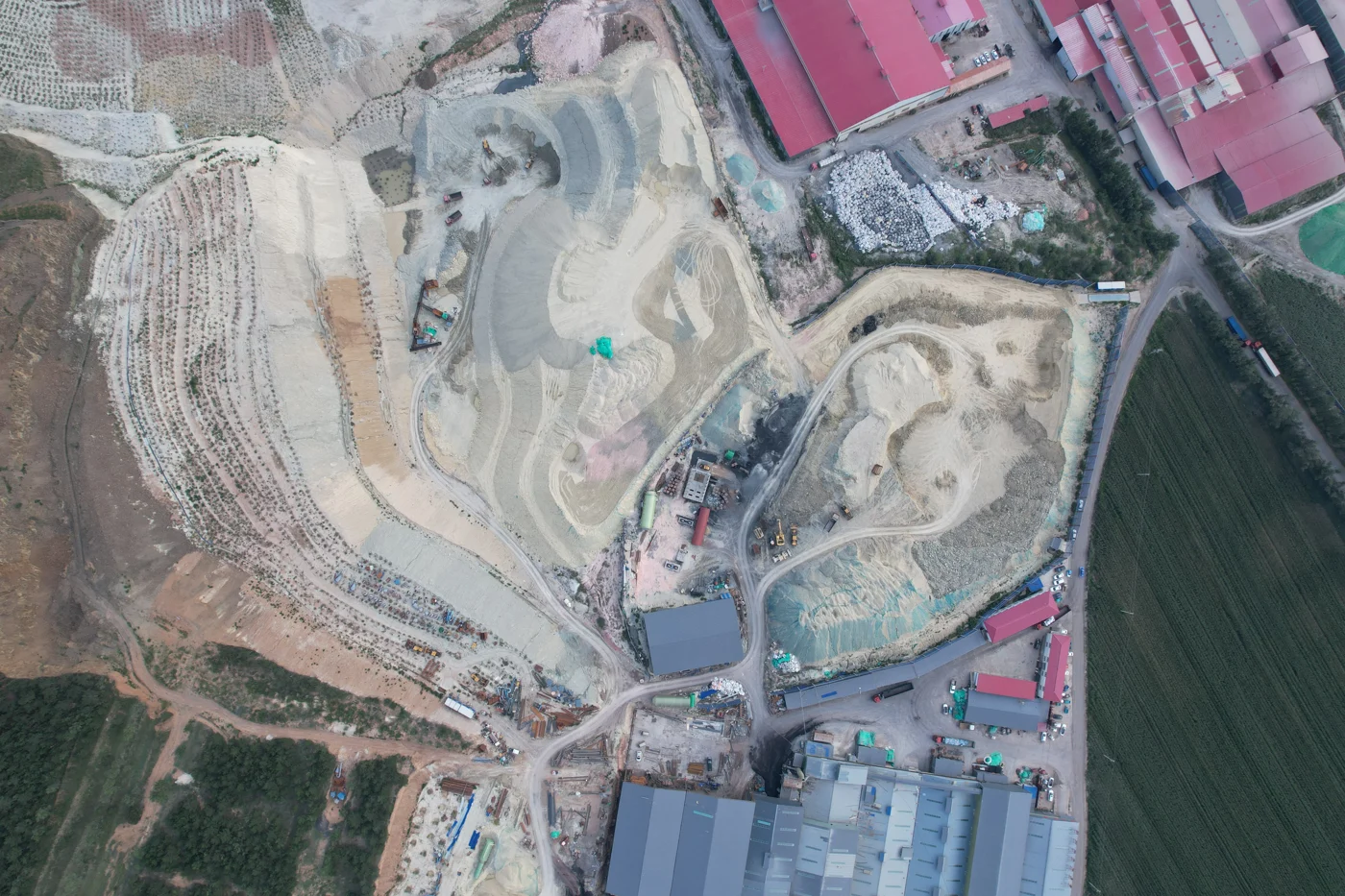
Our raw material site, shown in an aerial photograph from the LINGSHUAI image library. The photograph shows the site; mineral composition is established separately from its appearance.
What Bentonite Means in Our Cat Litter
Bentonite Clay and Its Role as Our Base Material
We use bentonite as the mineral foundation of our litter, rather than as a name for one granule shape or one formula. Bentonite is composed mainly of montmorillonite, a clay mineral in the smectite group. Its ability to interact with water is central to its use in absorbent products. The mineral background is described in the WHO/IPCS review of bentonite and related clays.
In our product range, “bentonite” identifies the base material. “Ball,” “fine granule” and “crushed” describe different finished formats. Zeolite or carbon identifies a formulation direction. Keeping these descriptions separate lets us explain a product precisely, without suggesting that every bentonite litter has the same size, appearance or composition.
Our raw material supply and production are part of the same manufacturing discussion. A mineral’s natural origin does not remove the need for processing or finished-product checks. We connect the material description with the processing route and the specification of the litter we supply.
Understanding Sodium Bentonite and Sodium Activation
Sodium bentonite cat litter is associated with the clay’s swelling and clumping behaviour. The USDA Agricultural Research Service identifies sodium bentonite as a material traditionally used for clumping litter.
We distinguish the raw material’s properties from the treatment applied during production. In our documented workflow, calcium bentonite is alkali-treated for sodium activation where the process requires it. We therefore do not describe every LINGSHUAI formula as untreated natural sodium bentonite.
When we discuss sodium bentonite clay cat litter with a customer, our explanation needs to match the selected material and formula. Natural source, sodium activation, granule format and added ingredients describe different parts of that product. They are not interchangeable claims.
How Bentonite Forms Clumps in Our Litter
From Liquid Absorption to Clump Formation
Our clumping formulas use bentonite’s interaction with water to gather wetted material together. As liquid enters the litter bed, the clay takes up moisture and the wetted particles form a mass. The finished granule structure and formula influence how that mass develops.
For our production work, absorption is one part of the result. The formed clump also needs to be considered after it has rested and when it is lifted. Litter depth, liquid amount and waiting time affect the conditions under which those observations are made, so our explanation of a result must retain its test method.
Why We Distinguish Clumping Time from Clump Strength
We treat the time taken to form a clump and the clump’s resistance to breakage as separate properties. A short clumping-time result cannot, on its own, describe what happens during scooping or repeated handling.
This distinction matters in the questions raised about litter that forms a clump but then breaks apart. Our response is to describe the relevant property and the evidence for the particular product, rather than use “strong clumping” as a substitute for all measurements. We also keep the demonstration of a sample separate from a laboratory result.
How We Process Bentonite into Finished Cat Litter
Drying, Activation and Grinding
Our documented routes begin with drying the raw bentonite. Where required, calcium bentonite undergoes sodium activation, followed by grinding with a Raymond mill.
These steps prepare the material for the next processing stage. We describe them openly because the word “natural” can otherwise create the impression that finished cat litter is simply excavated mineral placed into a bag. Our litter retains its mineral base while undergoing a defined manufacturing process.
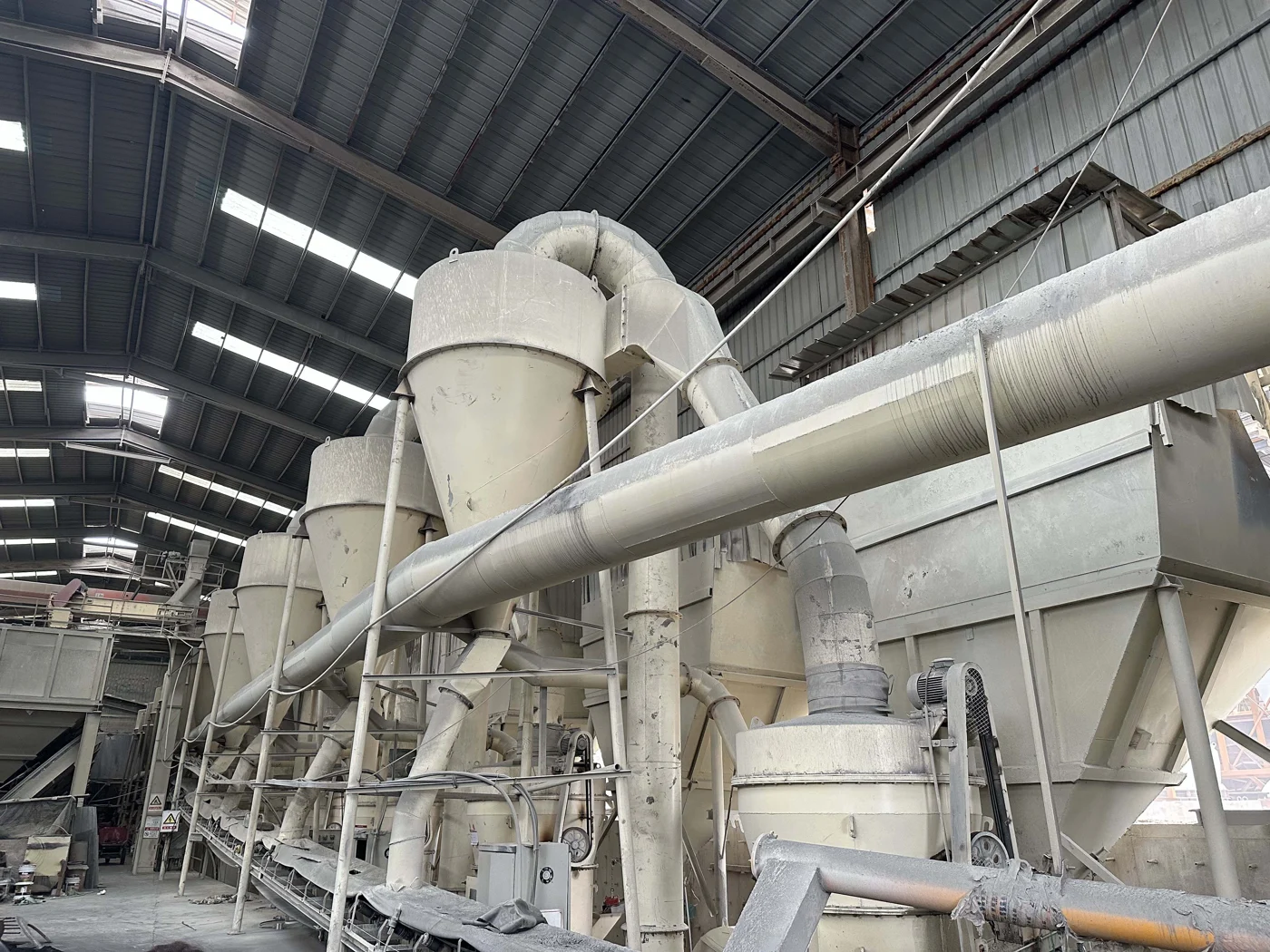
A view inside our production workshop. The process illustration below explains the documented sequence; this photograph is not used to identify every individual machine or prove a dust-emission level.
Granulation or Crushing, Followed by Screening
Our spherical-product route uses a pan granulator. Our documented crushed-product route uses a double-roll crusher. After forming, the material is dried and screened to the target particle-size range, then transferred to bulk storage before packaging and filling.
The selected formula can include coloured granules, fragrance, carbon granules or other specified ingredients. These are formula choices, rather than features that we assume are present in every order.
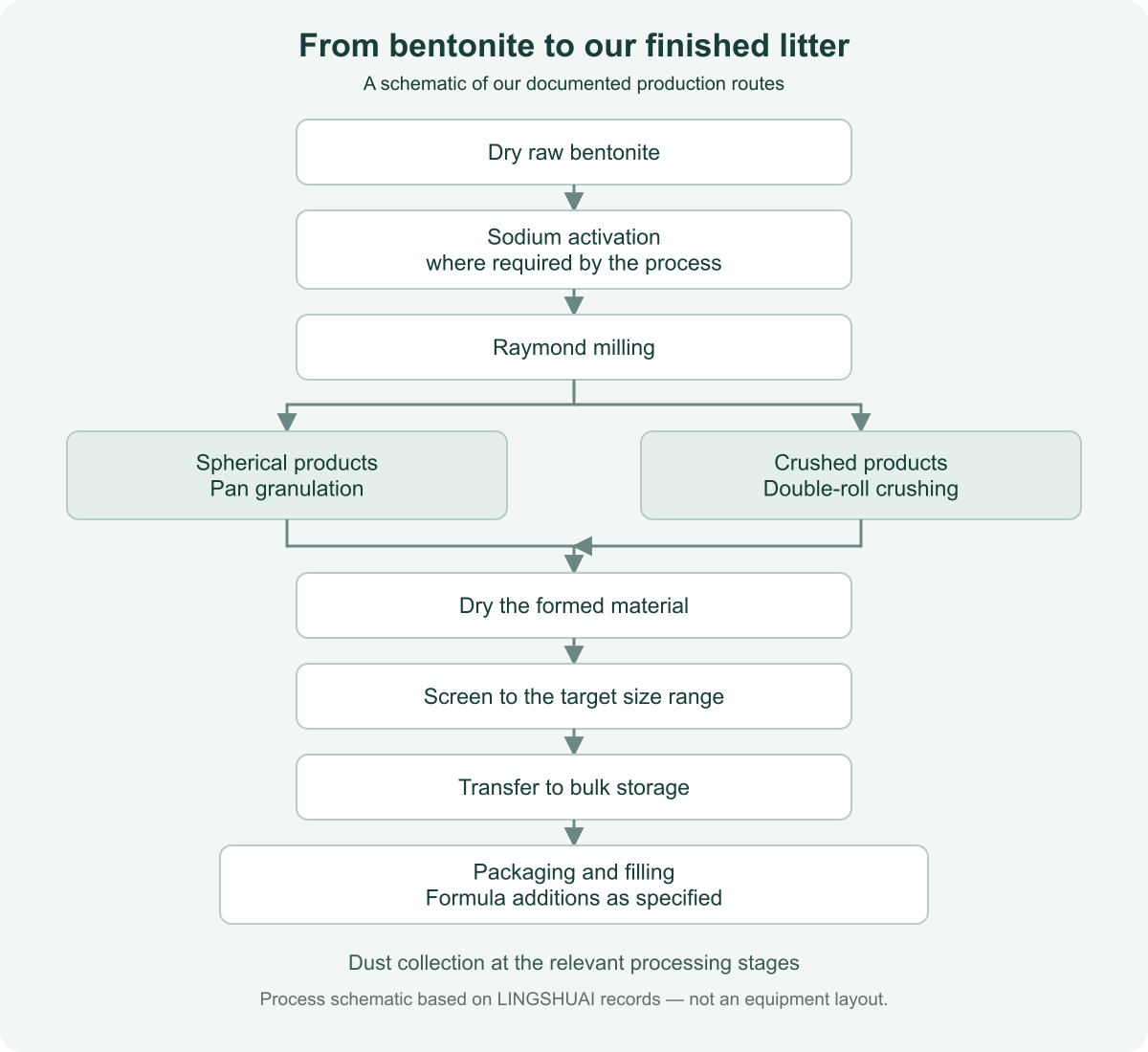
Our documented processing routes, drawn as a schematic. The two branches distinguish spherical and crushed products; they do not represent a scale drawing of the factory.
Dust Collection Throughout Relevant Production Stages
Our workflow includes dust collection during relevant forming, drying, screening and packaging stages. We also screen the material to the intended size range. These are concrete parts of our processing description, rather than a claim that every finished granule is free of loose fines.
We keep dust-related language tied to what has actually been measured. A powder-content result, an observation during pouring and a measurement of airborne dust answer different questions. Our product information should name the relevant item instead of converting all of them into an unsupported “100% dust-free” statement.
Why Our Bentonite Products Have Different Granules and Formulas
Our Round, Fine and Crushed Granule Formats
We produce several formats from a bentonite base. Our Ball Bentonite Cat Litter has a reference particle-size range of 1–3.5 mm. Our Bentonite Millet Cat Litter has a finer reference range of 0.5–1.44 mm. “Millet” is the product’s fine-granule name; the base is bentonite, not millet grain.
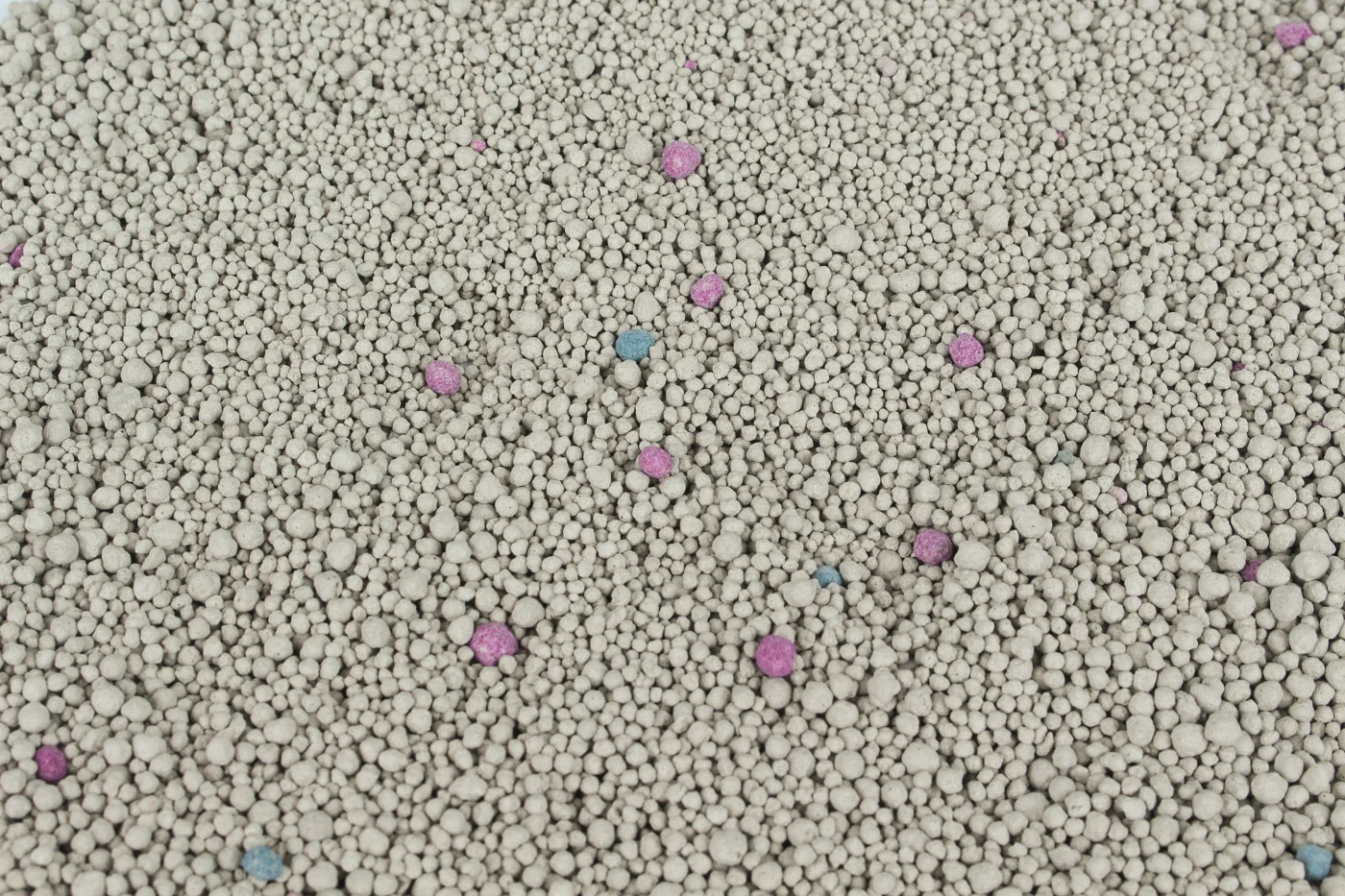
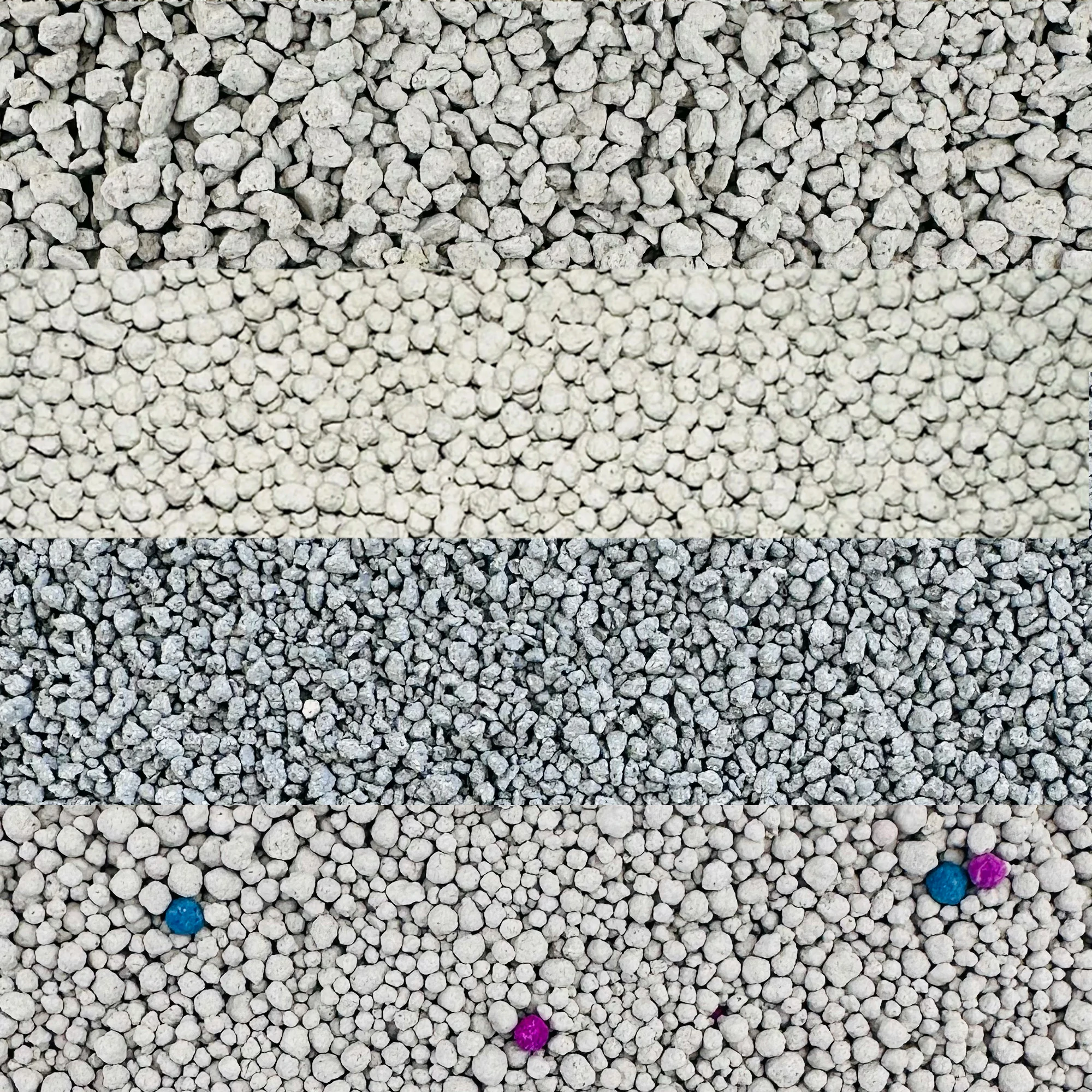
Our Ball Bentonite Cat Litter sample. The photograph shows its round granular appearance, not a measured particle-size distribution.
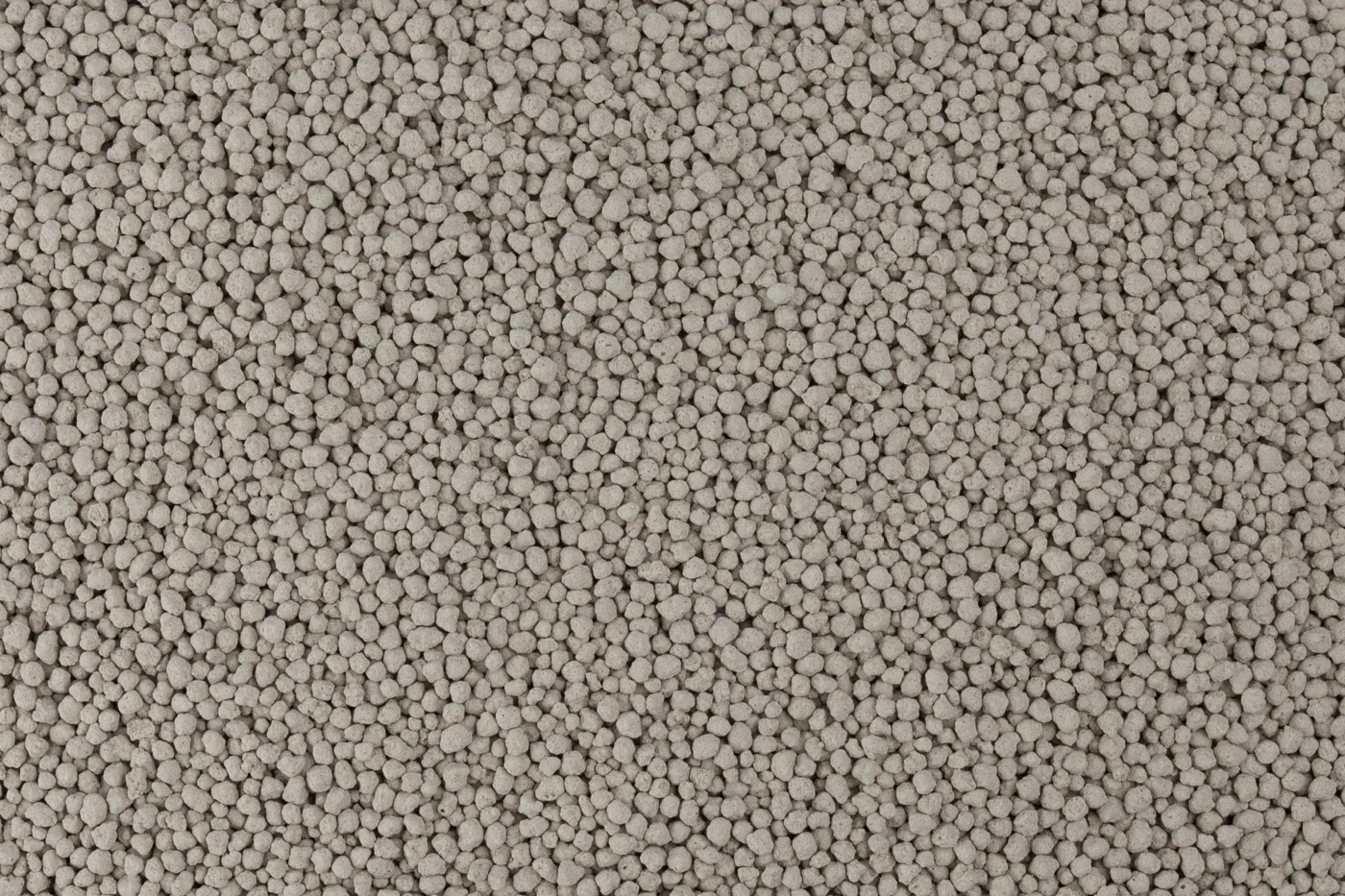
Our Bentonite Millet Cat Litter sample, representing the finer-granule product format.
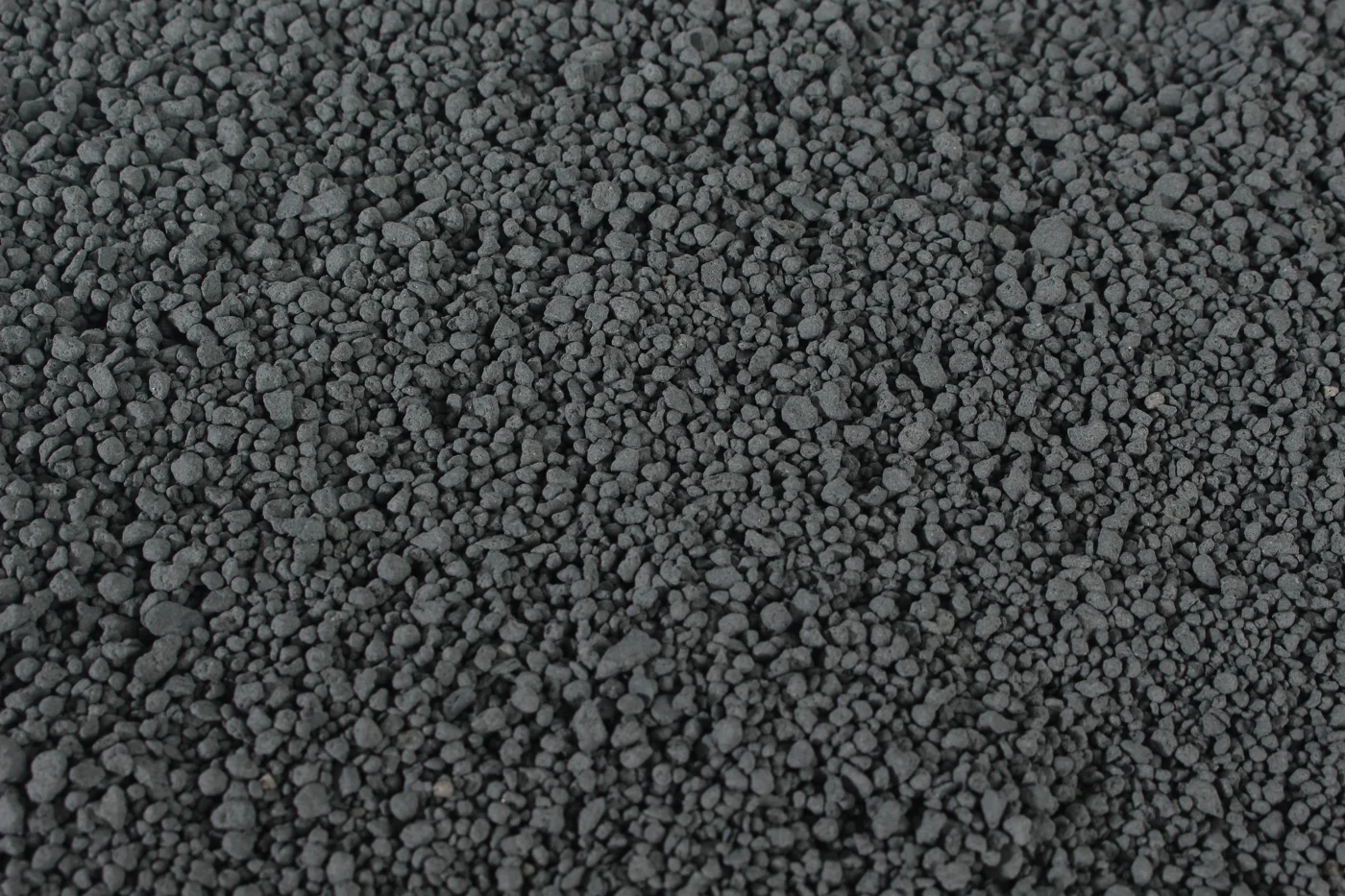
Our Crushed-type Carbon Bentonite Cat Litter sample, showing this product’s irregular crushed format. This is one specific formula in our range; its dark appearance alone does not establish ingredient composition or performance.
| Our product | Format or formula direction | Reference particle-size range |
|---|---|---|
| Ball Bentonite Cat Litter | Round bentonite granules | 1–3.5 mm |
| Bentonite Millet Cat Litter | Fine bentonite granules | 0.5–1.44 mm |
| GreenGuard Bentonite Cat Litter | Zeolite-and-bentonite blend | 0.5–2 mm |
| Crushed-type Carbon Bentonite Cat Litter | Crushed carbon-and-bentonite formula direction | 0.5–2 mm |
Our size and format descriptions explain what we offer. They do not establish a universal ranking for tracking, texture or clump strength. We review those properties in relation to the particular material, formula and conditions, rather than infer them from particle size alone.
How We Use Zeolite, Carbon and Fragrance in Selected Formulas
Our GreenGuard Bentonite Cat Litter uses a zeolite-and-bentonite formulation direction. Zeolite contributes adsorption and ion-exchange functions within an appropriately designed formula. Our Crushed-type Carbon Bentonite Cat Litter provides a carbon-containing product direction.
We distinguish these functional ingredients from fragrance. Fragrance gives a selected scent; carbon and zeolite are used for different formulation purposes. The presence of an ingredient explains part of our design, but it does not, by itself, establish a specific odour-removal percentage.
Our sales team follows up on the customer’s preferred formula direction, scent and product requirements. We then connect that discussion to the available specification and sample, rather than present every optional ingredient as standard across the range.
How We Check Our Finished Bentonite Litter
Clumping, Moisture, Absorption and Dust-Related Checks
Our quality-control work connects the product specification with the properties under review. Relevant items include appearance, particle-size distribution, loose fines, clump formation, resistance to breakage, liquid absorption and moisture content. The exact scope depends on the product and the agreed requirements.
For clumping observations, the liquid, dose, waiting time and handling method need to be stated. For dust-related results, the reported definition matters. We keep powder content, powder generation and the report’s “powder-free rate” separate; a name that sounds similar is not a reason to treat two methods as equivalent.
What Our Ball Bentonite Test Results Show
We use our Ball Bentonite Cat Litter to illustrate the properties we check after processing. The following results describe moisture in the sample, clump formation and liquid uptake—three different aspects of the finished litter.
| Property we check | Reported result | What the measurement tells us |
|---|---|---|
| Moisture content | 4.3% | How much moisture was present in the tested sample |
| Clumping time | 2 seconds | How quickly the sample formed a clump under the test conditions |
| Liquid absorption rate | 246.0% | The sample’s liquid uptake, expressed using the test method’s percentage calculation |
Source: Ball Bentonite Cat Litter, report A2260307543101002C. Method: Q/510113HTZ 001-2024.
We also keep powder content as a separate measurement. For the same product, another report records the following:
| Property we check | Reported result | What the measurement tells us |
|---|---|---|
| Powder content | 0.4% | The proportion of powder measured by the specified method |
Source: Ball Bentonite Cat Litter, report A2260307543101001C. Method: with reference to T/ZGXX 0005-2022, section 6.8.
Together, these results show how we describe this Ball formula through measured properties after manufacture. Our team can discuss these properties alongside the product specification and sample requirements when following up on an enquiry. The figures apply to the tested samples and methods; clump strength and airborne dust require their own assessments.
Discuss Your Bentonite Litter Requirements with LINGSHUAI
For us, bentonite cat litter is a mineral base developed into a defined product through processing, particle-size control and formulation. Our round, fine and crushed formats show the different directions we can discuss while working with that base material.
When a customer contacts LINGSHUAI, our sales team follows up on the target market, granule format, formula direction, scent, packaging and required documents. We use that conversation to clarify the specification and arrange the relevant product or sample discussion. The proposal follows the customer’s requirements rather than an instant-purchase selection on the website.