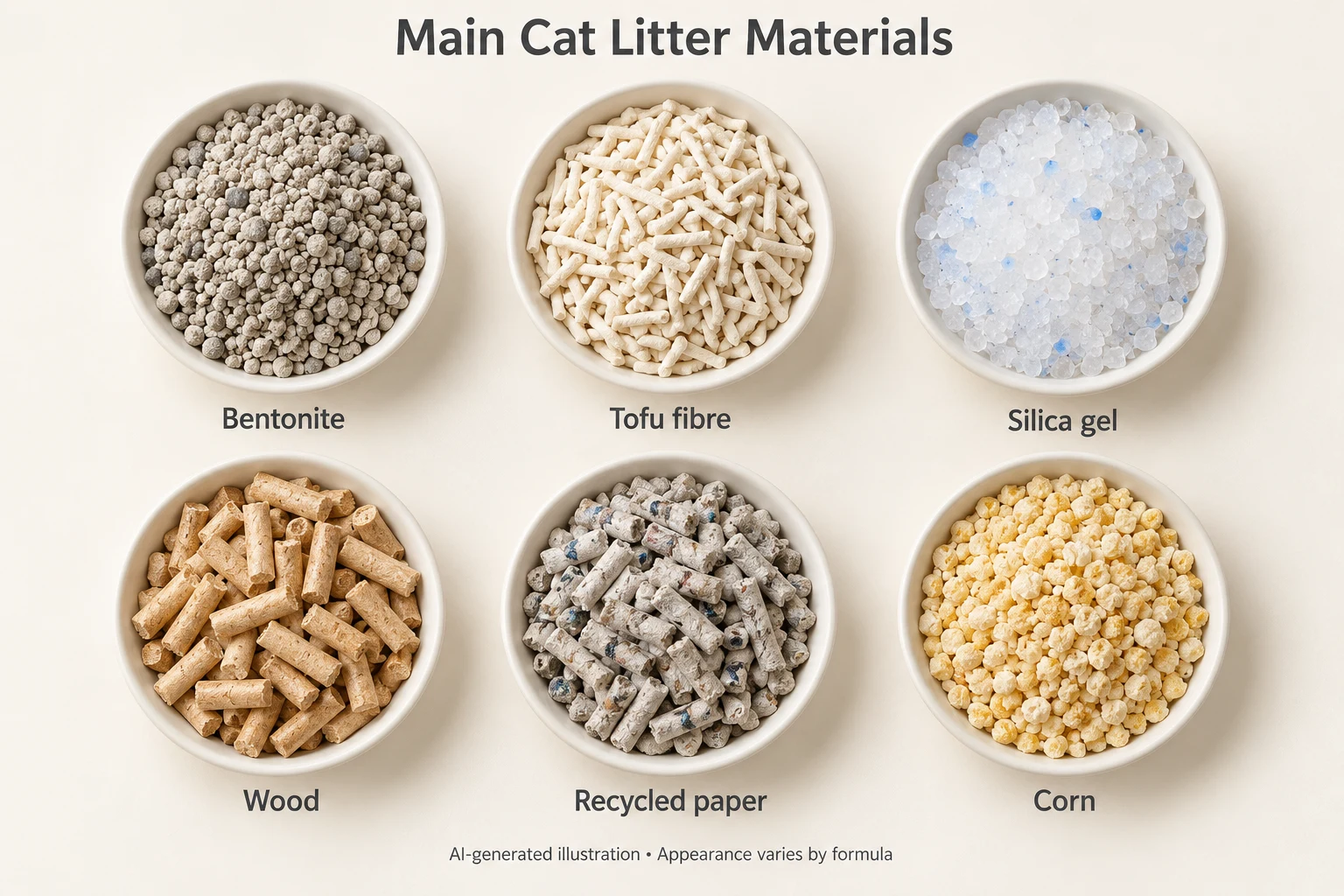
From Bentonite Mine to Finished Cat Litter: LINGSHUAI Factory Supply
We explain how our own mineral resources, drying equipment, granulation and shipment checks support our bentonite cat litter production.
Bentonite cat litter is a mineral-based litter made from bentonite clay. In clumping formulas, the clay absorbs liquid and brings wetted particles together into removable clumps. At LINGSHUAI, we produce bentonite litter for cats, using the clay as the base for our round, fine-granule and crushed-format cat litter products.
Our work starts with our own bentonite resources and continues through raw material preparation, granulation, drying, screening and pre-shipment inspection. Here, we explain what the material means in our products, how we process it, and how our mineral resources and equipment support production throughout the year.
1. What Bentonite Cat Litter Means at LINGSHUAI
For us, bentonite is the foundation of the formula. It identifies the mineral material, while terms such as round, fine and crushed describe the finished granules. Carbon, zeolite and fragrance identify further aspects of a selected formula.
Bentonite consists mainly of montmorillonite, a clay mineral in the smectite group. Its interaction with water is central to its use in absorbent products, as described in the WHO/IPCS technical review of bentonite. We use that material behaviour in our manufacturing work, then prepare the granules and formula for a defined product specification.
We also distinguish the raw clay from the processing it receives. Our documented production routes include sodium activation of calcium bentonite where required by the process. When discussing sodium bentonite cat litter, we therefore explain the selected material and treatment rather than describe every product as untreated natural sodium bentonite.
2. Why We Use Bentonite for Clumping Cat Litter
We use bentonite because its interaction with water provides a basis for clump formation. Sodium bentonite is a material traditionally used in clumping litter, as noted by the USDA Agricultural Research Service.
In our production work, taking up liquid and forming a useful clump are connected properties. We consider how the wetted material gathers together, how quickly a clump forms and how it holds its structure when handled. These observations describe different parts of the result: liquid absorption alone does not establish clump strength, and a short clumping time does not describe every aspect of scooping.
This is why we connect our material explanation with a specific product, its processing and its test conditions. A pouring or clumping demonstration helps show a sample’s behaviour, while a report provides measurements under its stated method.
3. Our Own Bentonite Resources Support Production and Supply
Our own bentonite resources give us a direct foundation for raw material supply. They allow us to organise production around our mineral resource base and reduce reliance on externally purchased material.
Having direct access to the source also gives us closer control over the relationship between the mineral material and our production requirements. We can coordinate raw material supply with the granule formats and formulas we manufacture. That continuity provides a useful foundation for managing consistency across batches.
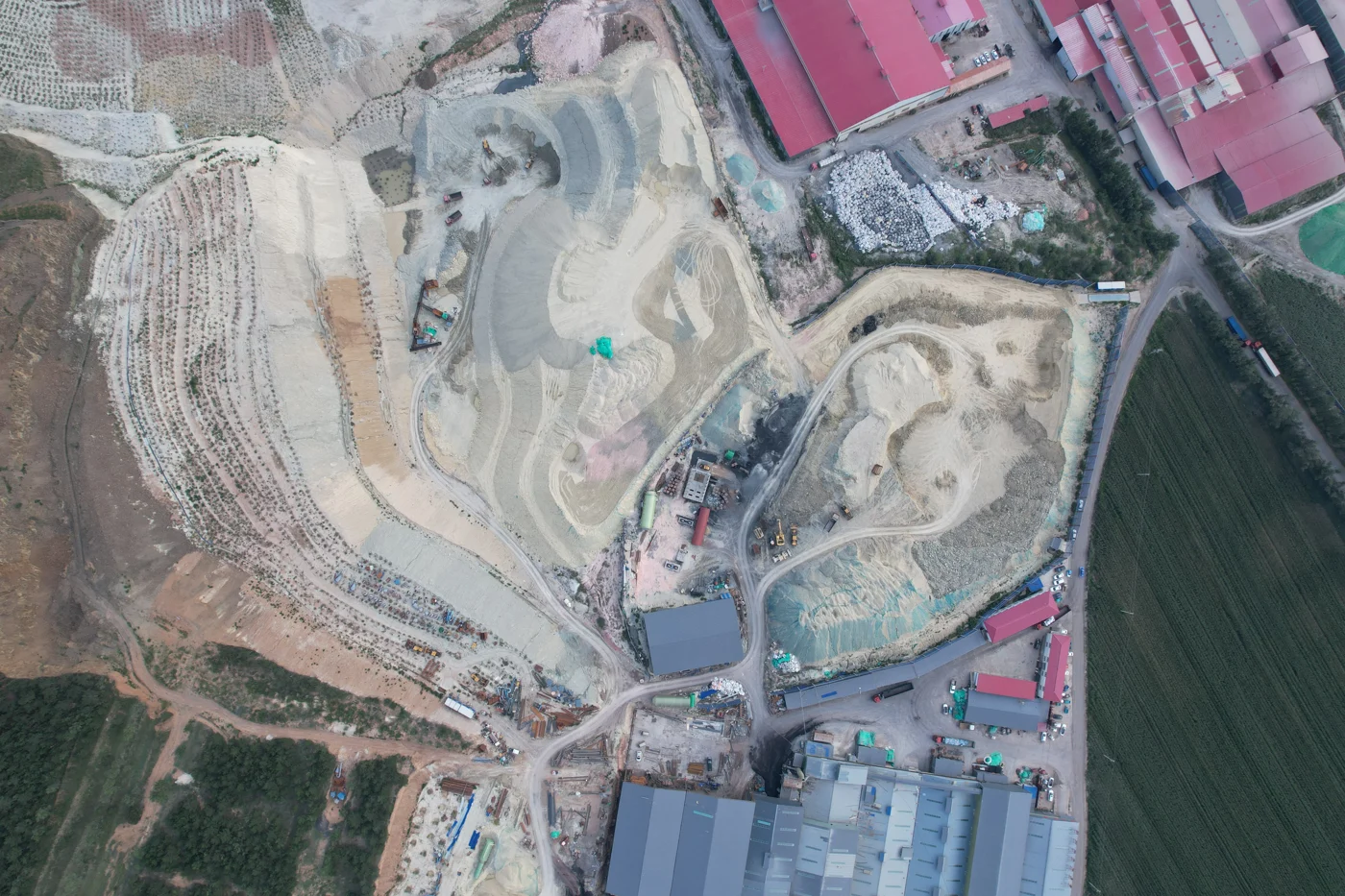
An aerial view of our mineral resource site and surrounding production buildings.
Our control of the source works together with processing and inspection. Drying, granulation, screening, formula preparation and checks before each shipment all contribute to the finished product. We manage batch stability across that production chain rather than rely on the mine alone to establish finished-litter quality.
Our supply arrangements also include production during cold weather. We use professional drying equipment to help maintain drying and moisture control in winter, supporting our year-round production and supply capability.
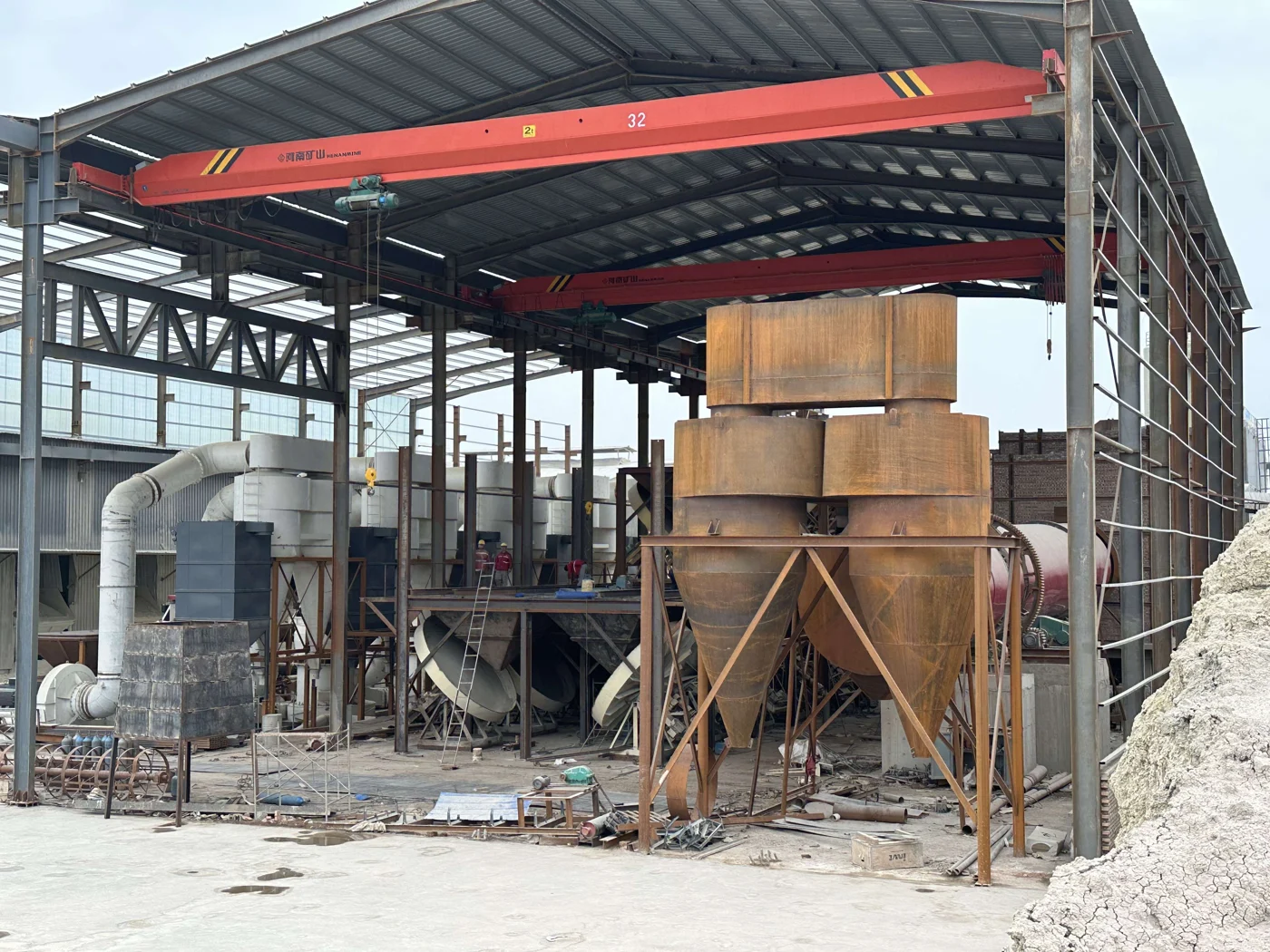
Our drying equipment supports bentonite processing during cold winter conditions.
Together, our mineral resources, drying equipment and production planning support continuity from raw material to finished litter. Our team coordinates the specification, packaging and delivery arrangements for each order within that manufacturing system.
4. How We Turn Bentonite into Finished Granules
Our process begins with drying the raw bentonite. Calcium bentonite receives alkali treatment for sodium activation where required, and the material is ground using a Raymond mill.
We then use a pan granulator to form near-spherical granules. This granulation stage is part of both our spherical and crushed-product routes. For the crushed format, we process the formed granules through a double-roll crusher to create an irregular shape.
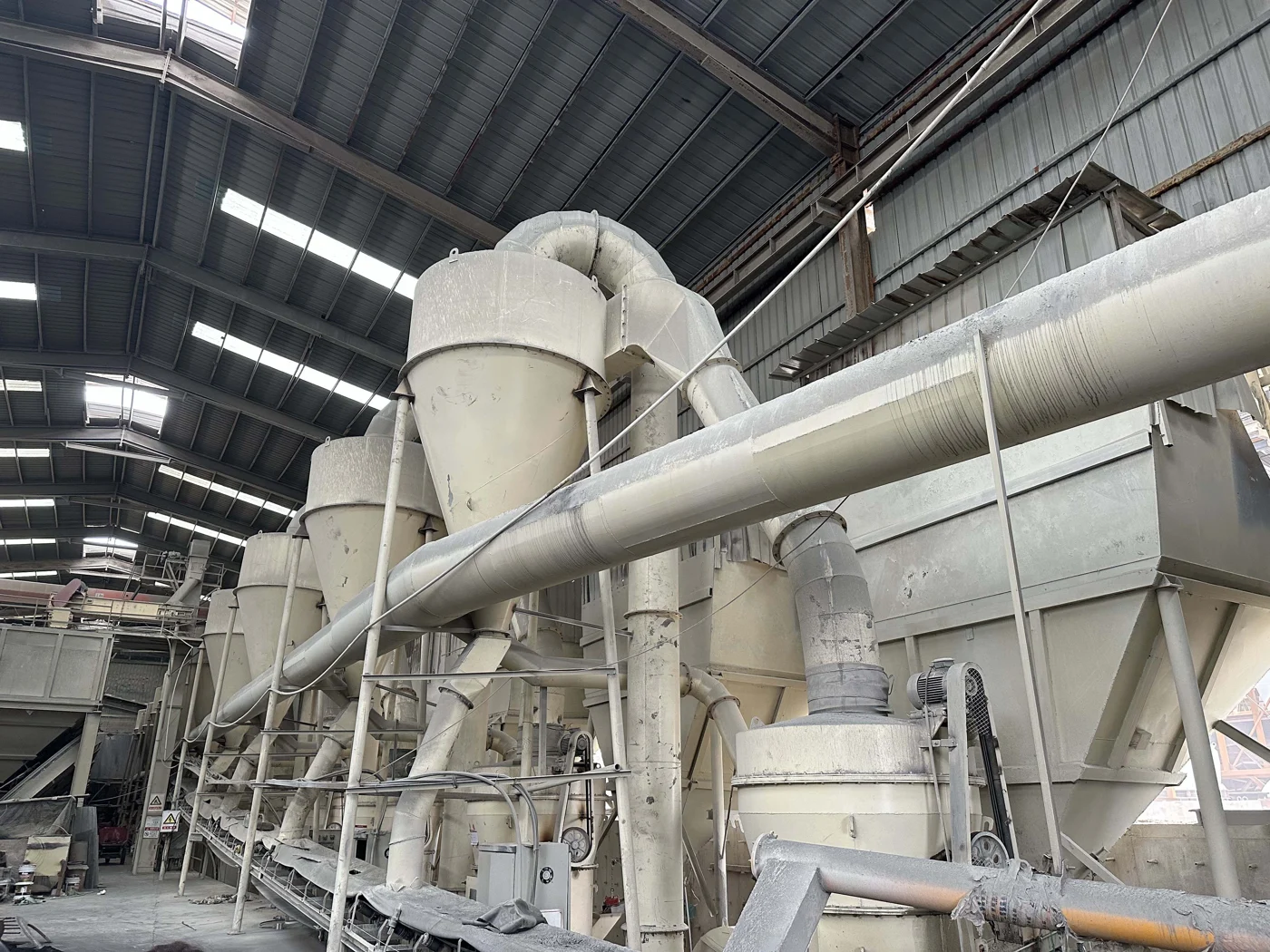
Processing equipment and ductwork in our bentonite production workshop.
The material then passes through drying and screening to the target particle-size range, followed by transfer to bulk storage and packaging. Dust collection is included at the relevant processing stages. Formula additions, including specified coloured particles, carbon materials or fragrance, follow the selected product requirements.
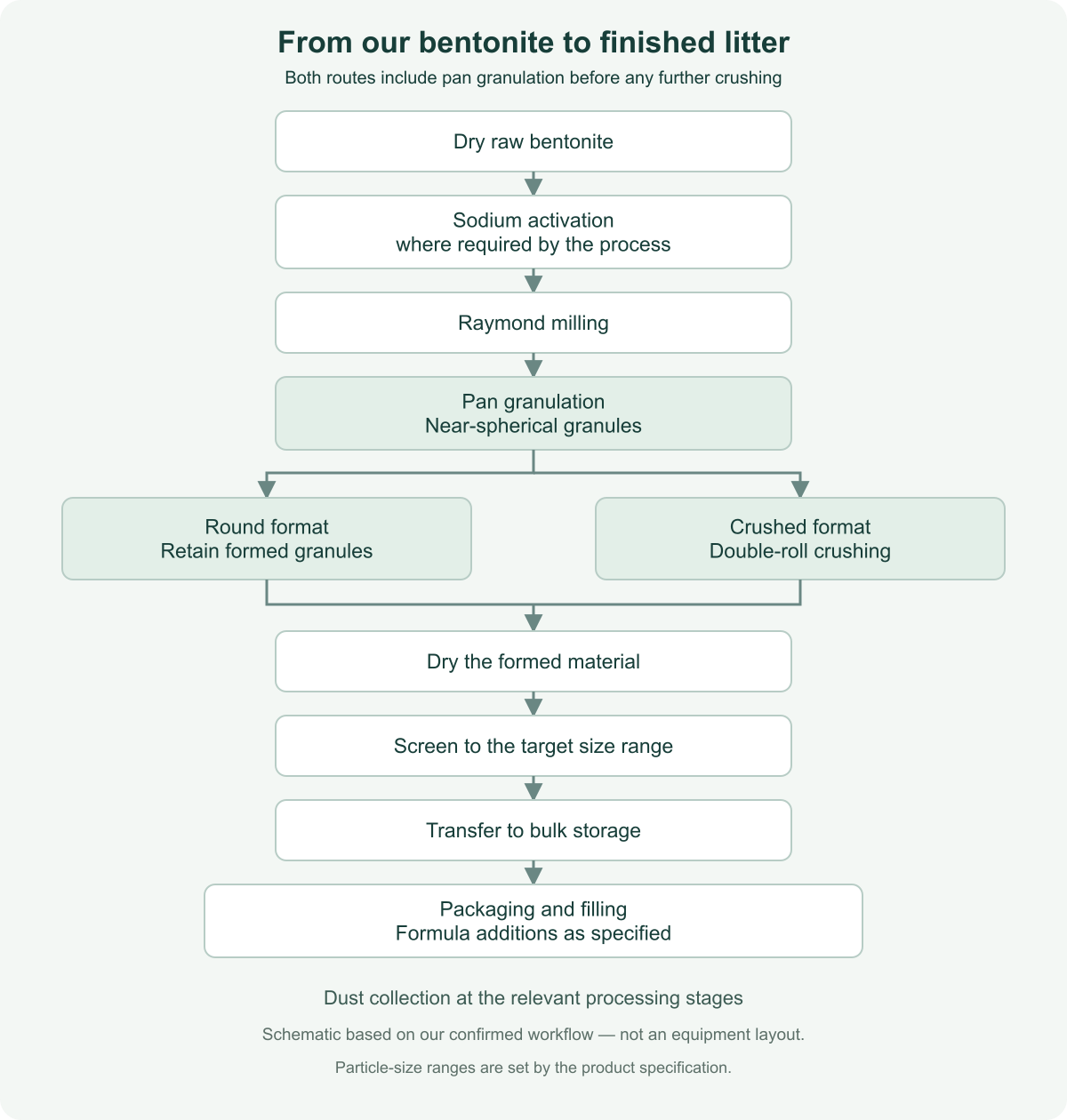
Our confirmed production sequence. Both routes include pan granulation; the crushed route adds double-roll processing after granules have formed. The illustration is a process schematic, not a factory layout.
This sequence explains how we move from a common mineral base to different finished formats. The granule shape and size are outcomes of the production route and screening specification, rather than separate kinds of mineral.
5. Our Round, Fine and Crushed Bentonite Products
We use particle shape and size to describe our finished products accurately. “Round” and “crushed” describe shape; “fine” describes a size range. These descriptions can overlap, so we connect them with the named product rather than treat them as three unrelated raw materials.
Our Ball Bentonite Cat Litter provides the round-granule format, with a reference range of 1–3.5 mm.
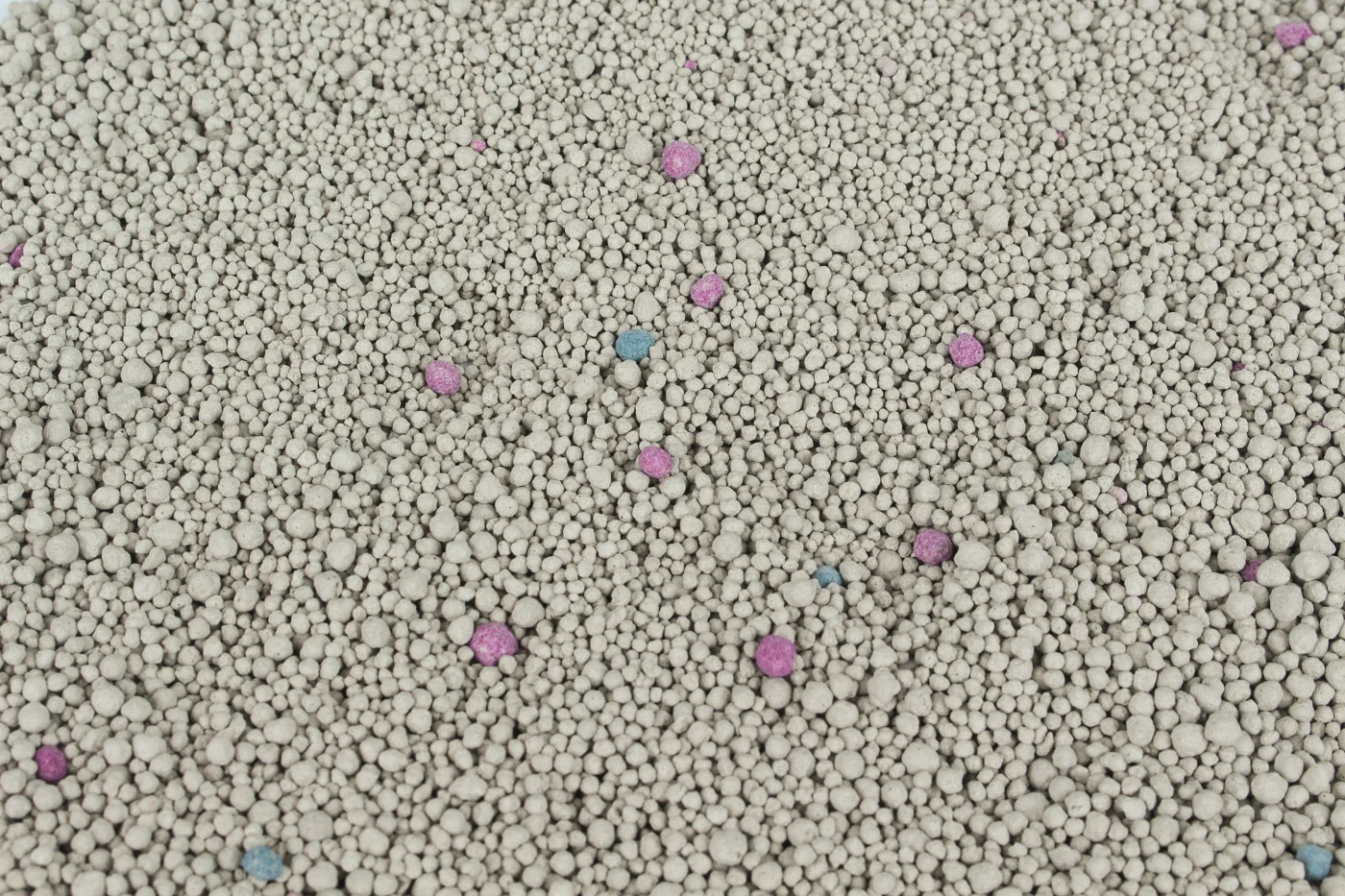
Our Ball Bentonite Cat Litter sample.
Our Bentonite Millet Cat Litter provides a finer reference range of 0.5–1.44 mm. The name describes this fine-granule product; its base material is bentonite rather than millet grain.
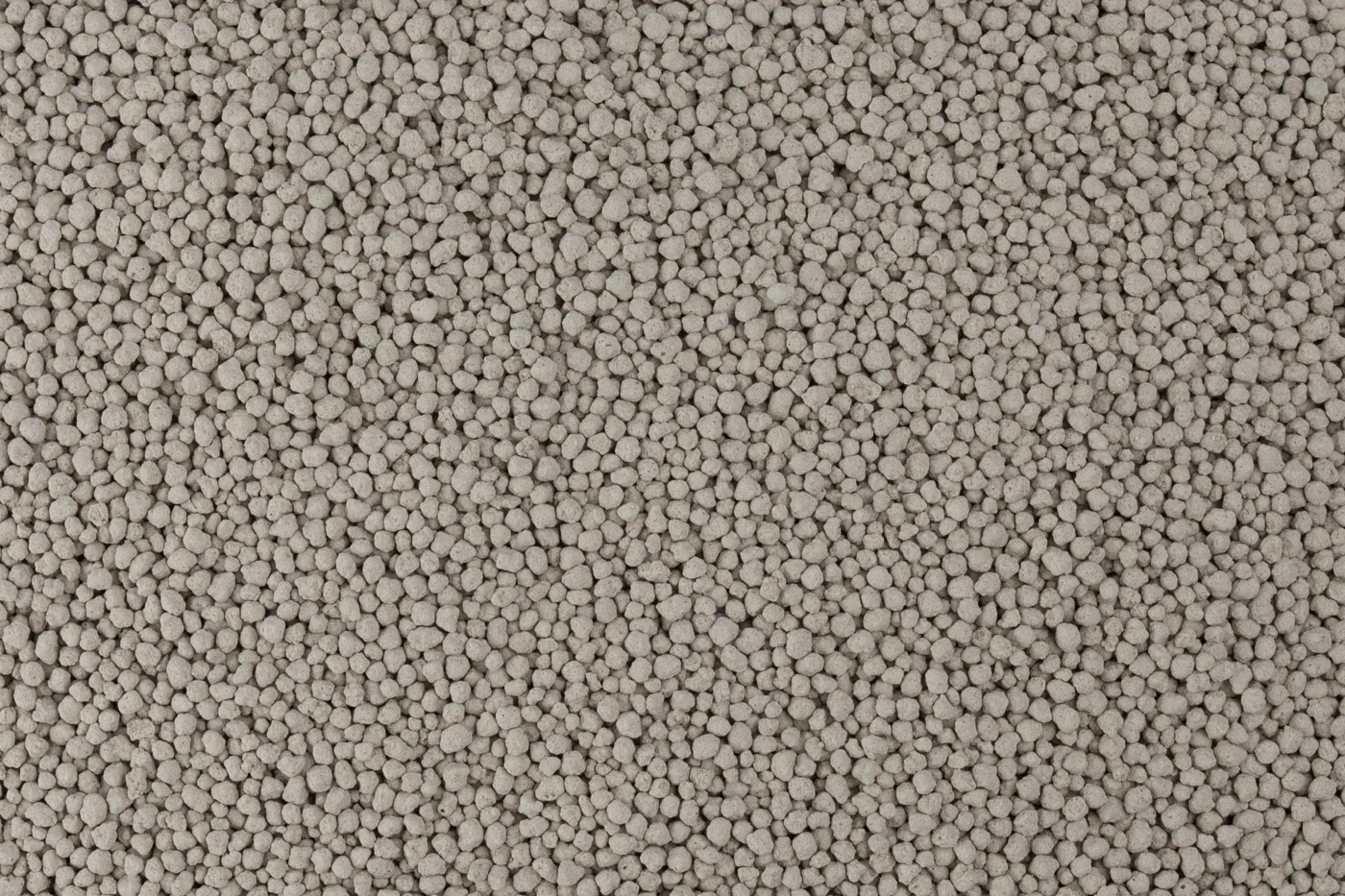
Our Bentonite Millet Cat Litter sample.
Our Crushed-type Carbon Bentonite Cat Litter combines an irregular crushed format with its carbon-containing formulation direction, with a reference particle-size range of 0.5–2 mm.
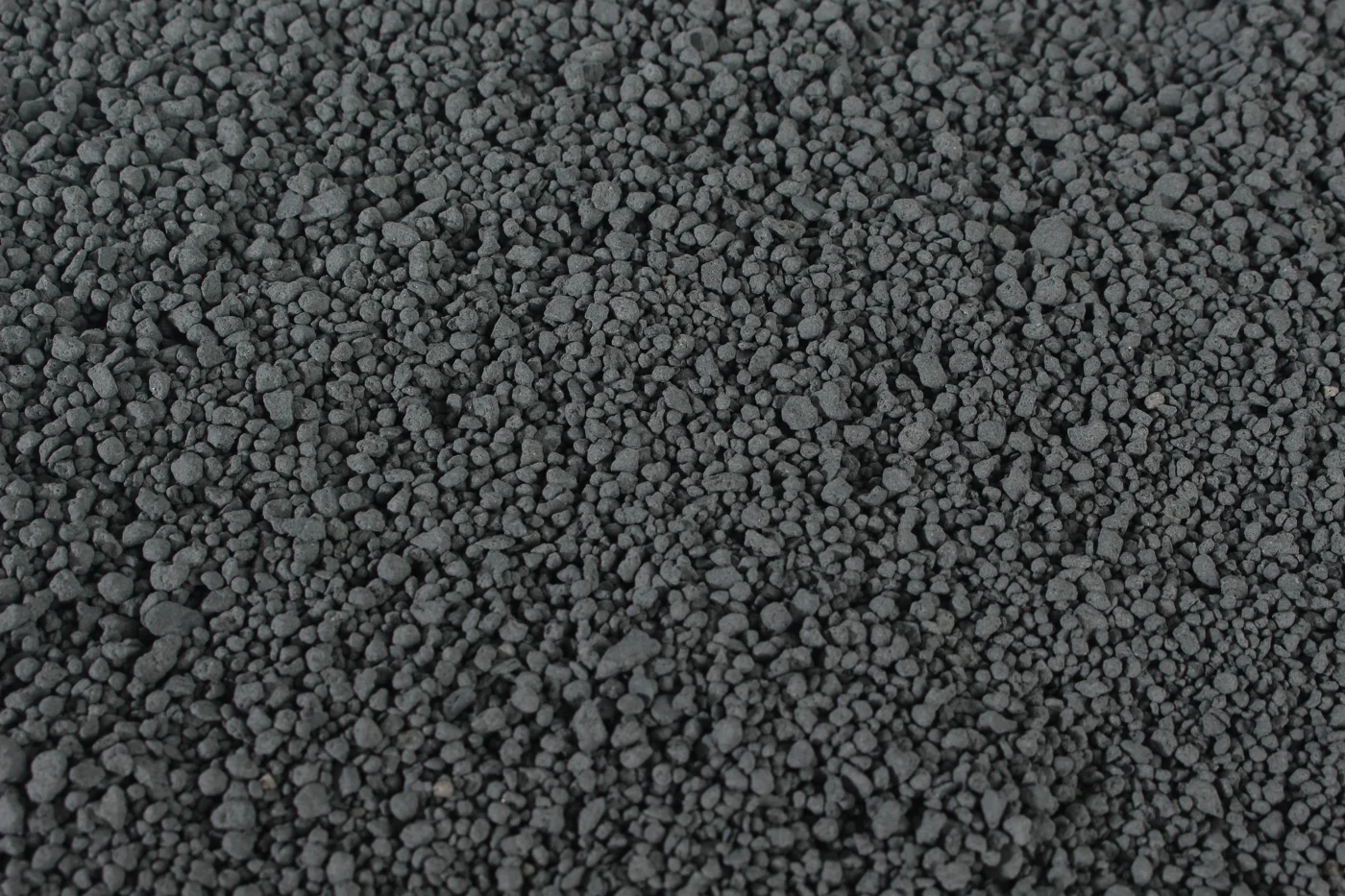
Our Crushed-type Carbon Bentonite Cat Litter sample, showing the irregular granular format.
| Our product | Material or formula direction | Reference particle-size range |
|---|---|---|
| Ball Bentonite Cat Litter | Round bentonite granules | 1–3.5 mm |
| Bentonite Millet Cat Litter | Fine bentonite granules | 0.5–1.44 mm |
| GreenGuard Bentonite Cat Litter | Zeolite-and-bentonite blend | 0.5–2 mm |
| Crushed-type Carbon Bentonite Cat Litter | Crushed carbon-and-bentonite formula direction | 0.5–2 mm |
These specifications describe the product formats we can discuss with customers. Our team follows up on the intended particle range and formula, then connects that requirement with the relevant product and sample.
6. How We Develop Different Bentonite Formulas
We offer formula directions that build on the bentonite base. Our GreenGuard Bentonite Cat Litter uses a zeolite-and-bentonite blend. Carbon-containing materials provide another direction within our range. We explain these ingredients through the selected formula and its intended function, with measured performance kept tied to the corresponding tested product.
Fragrance is a separate part of the discussion. We can use oil-based liquid fragrance and powdered fragrance to add a selected scent. Oil-based liquid fragrance is the more commonly used type in our production. We use powdered fragrance together with liquid fragrance; powdered fragrance makes up no more than 50% of the total fragrance added for a tonne of litter. This is a proportion within the fragrance blend, not a percentage of the litter’s total weight.
Our team follows up on the customer’s scent preference and formula requirements. We then discuss the corresponding product specification and sample, keeping optional ingredients separate from the features of a standard agreed formula.
7. What We Check Before Every Shipment
Every batch goes through our pre-shipment checks. We examine the finished granules for appearance, particle-size distribution and loose fines, then check clump formation and integrity. Moisture and liquid absorption are also part of our review of the finished material.
For our GreenGuard Bentonite Cat Litter, the following selected test results show how measured properties are assessed against the requirements in its report:
| Property | GreenGuard test result | Requirement in this report |
|---|---|---|
| Moisture content | 5.7% | ≤18% |
| Clumping time | 2 seconds | ≤15 seconds |
| Liquid absorption rate | 485.85% | ≥150% |
Source: GreenGuard Bentonite Cat Litter report A2260333854101001C. Method: Q/510113HTZ 001-2024. The values above apply to the tested sample.
Our final checks also cover the packed product: the agreed scent, net fill weight, seal integrity, bag condition and batch identification. Together with the granule and performance checks, these steps connect production with the product and packaging specifications confirmed for the order.
8. Discuss Your Bentonite Cat Litter Requirements with Our Team
At LINGSHUAI, bentonite cat litter connects our mineral resources with production, formulation and checks before shipment. Our own raw material base supports supply planning, our drying equipment supports year-round processing, and our forming and screening routes create different finished granule specifications.
When you contact us, our sales team follows up on your target market, particle format, formula direction, scent, packaging and document requirements. We then work through the relevant product or sample discussion and propose a suitable solution based on your needs.