Cat Litter Without Dust: How to Compare Low-Dust Claims
Compare low-dust cat litter claims using consistent samples, test methods, particle ranges, transport simulation, evidence, and careful handling.

Cat Litter Without Dust: How to Compare Low-Dust Claims
No granular cat litter should be assumed to produce literally zero dust under every condition. Manufacturing, particle size, transport, storage, pouring height, scooping, and the age of an opened bag can all affect visible powder. A useful “low-dust” claim therefore needs a defined product, test method, result, and acceptance limit.
Why “Dust-Free” and “Low-Dust” Are Not the Same
“Dust-free” is often used as marketing language, but an absolute zero-dust promise is difficult to support without a stated detection limit. “Low-dust” is more meaningful when the supplier explains how the sample was prepared, handled, measured, and compared.
- Visible dust: a cloud observed during pouring or scooping.
- Fine-particle fraction: material below a defined sieve or particle-size threshold.
- Instrument result: a measurement produced under stated equipment and test conditions.
- Transport-generated fines: powder created when granules break during vibration and stacking.
These measurements answer different questions and should not be presented as interchangeable percentages.
How to Compare Products Fairly
| Variable | Keep consistent | Why it matters |
|---|---|---|
| Sample amount | Use the same mass or volume | A larger sample can create a larger visible cloud |
| Pouring method | Same height, speed and container | Handling changes airborne powder |
| Product condition | Compare fresh, opened and transport-simulated samples | Granules can break over time and in logistics |
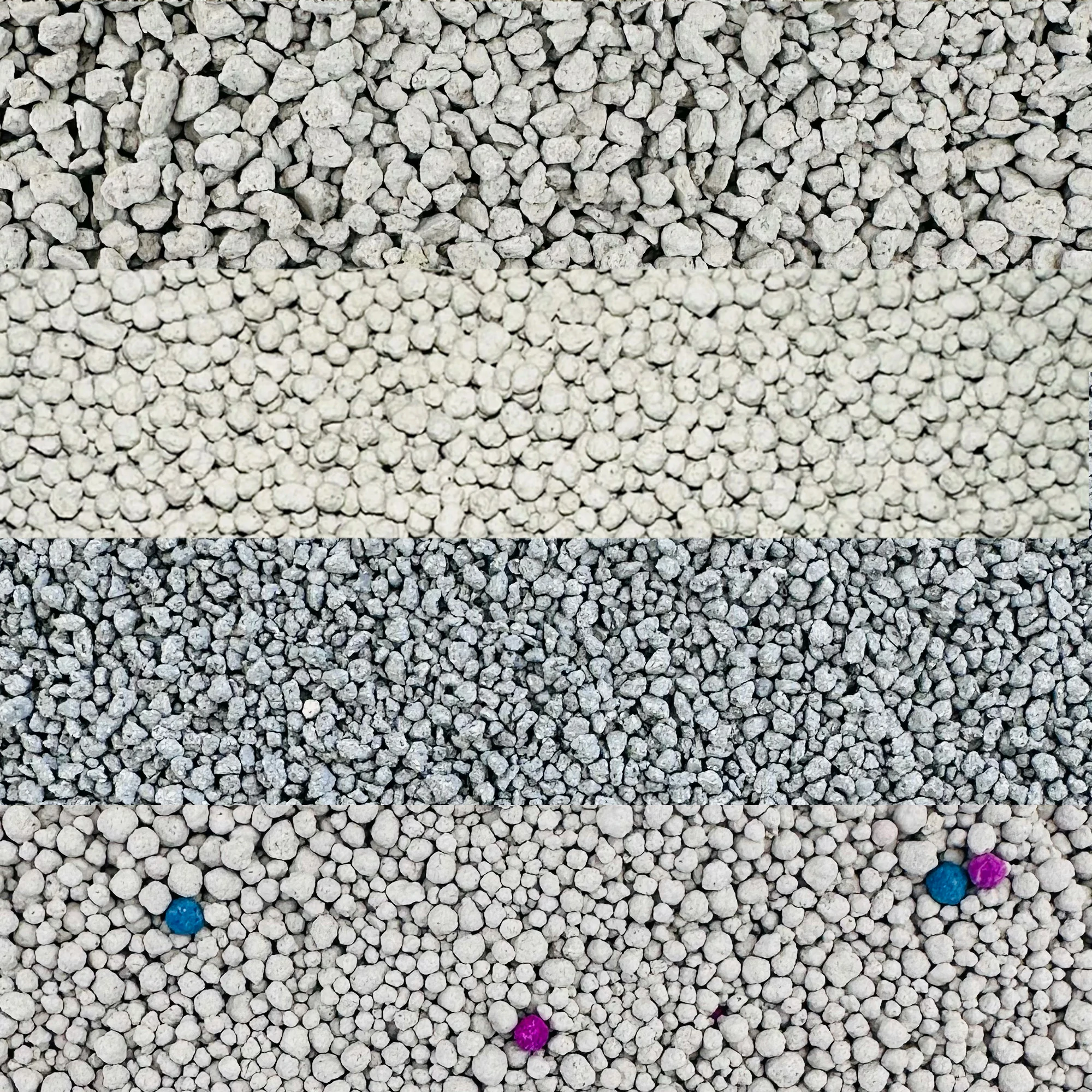
| Granule format | Compare like-for-like particle ranges | Fine, round and crushed products behave differently |
| Reporting | Use the same unit, method and detection limit | Percentages from different methods may not be comparable |
Product Features That Affect Dust
Granule strength
Weak granules may look clean at the factory but generate fines during transport. Ask for evaluation after vibration or shipping simulation, not only a freshly produced sample.
Screening and particle range
Screening can remove loose fines and oversize material. The target range and permitted fine fraction should be written into the specification.
Moisture and storage
Moisture influences granule strength and handling. Packaging should protect the product from humidity changes, leakage, and breakage without relying on vague claims.
Additives and coatings
An additive or surface treatment should be identified by function and included in the approved finished formula. It should not be described as automatically “safe,” “medical grade,” or “chemical-free.”
Home Handling Tips
- Open and pour the bag gently in a ventilated area.
- Keep the pouring height low instead of dumping from above the box.
- Avoid shaking the bag or stirring the tray unnecessarily.
- Keep opened packaging sealed and dry.
- Clean settled powder with an appropriate method rather than blowing it into the air.
- If a cat or person has persistent respiratory symptoms, stop exposure and seek professional advice.
Claims That Need Evidence
- “99% dust-free”: ask what was measured, by which method, and what the percentage represents.
- “Zero dust”: ask for the detection limit and whether transport-aged samples were tested.
- “Respiratory safe”: do not treat a product-performance test as a medical conclusion.
- “Natural”: natural origin does not describe dust level, complete ingredients, or suitability for every user.
Importer and Private-Label Checklist
- Identify the exact formula, granule range, and packaging.
- Agree on the dust test method, sample preparation, unit, and acceptance limit.
- Test more than one batch and include transport simulation where relevant.
- Match the report and artwork claim to the product actually supplied.
- Define change control for raw material, process, additives, and packaging.
For production-stage controls, see Low-Dust Bentonite Cat Litter: Factory Controls and Evidence.
Frequently Asked Questions
Does low-dust mean no visible powder?
No. The result depends on the product, method, handling, and detection threshold. Low dust should be defined by an agreed test and limit.
Can I compare two dust percentages directly?
Only when the products were tested using comparable sample preparation, methods, units, and reporting rules.
Does stronger clumping guarantee less dust?
No. Clumping and dust are separate performance characteristics, although formulation and granule strength can affect both.
What Is Bentonite Cat Litter?
คู่มือเลือกทรายแมวเบนโทไนท์ สำหรับตลาดประเทศไทย: หน้านี้อธิบายการเลือกสินค้าโดยไ…
Read more
Ultimate Guide to Clumping Cat Litter: Indonesian Cat Owners
Keeping your home fresh hinges on choosing the right clumping cat litter. Below,…
Read more
ชนิดของทรายแมว: วิธีเลือกให้เหมาะ
ประเภททรายแมวที่เหมาะกับตลาดของคุณ สำหรับตลาดประเทศไทย: หน้านี้อธิบายการเลือกสิน…
Read more